Health and Safety Courses Ireland: A Professional Guide to Qualifications and Career Growth
As Irish employers face increasing safety responsibilities and skills shortages, qualified health and safety professionals are the most sought-after specialists across a range of high-demand sectors like construction, manufacturing, and pharmaceutical organisation’s.
Whether you are starting your journey in occupational health and safety or aiming to progress into a more senior role, choosing from the many health and safety courses in Ireland can be challenging. From Level 6 diplomas that build practical workplace competence to Level 7 qualifications that prepare professionals for leadership and IOSH membership pathways, understanding the differences is essential.
This guide to Health and Safety courses in Ireland provides the essential roadmap you need to secure a recognised course that opens doors to a successful career. We’ll demystify the Irish qualification framework, and identify the specific accreditations that top-tier employers value. We will show you how to transition into managing safety and safety leadership. By the end, you’ll have a clear plan and vision as to how to achieve a professional career in occupational health and safety.
Key Takeaways
Understand how the National Framework of Qualifications (NFQ) to help you distinguish between introductory certificates and advanced professional diplomas.
Learn how employer responsibilities under the Safety, Health and Welfare at Work Act 2005 have shifted from basic compliance to managing risk.
Discover the “earned authority” model for successfully transitioning from a technical background into a recognised Safety Officer role.
Identify the criteria for selecting the right health and safety courses in Ireland prioritising IOSH accreditation and access to flexible online learning.
Gain insights into the specific career milestones and qualifications required to move from a specialist safety role into senior OHS management.
Table of Contents
The Evolving Landscape of Occupational Health and Safety in Ireland
Navigating the Qualification Framework: From Foundation to Professional Diploma
Strategic Career Progression: Transitioning into a Heath and Safety Officer Role
Choosing the Right Institute for Professional Success
The Evolving Landscape of Occupational Health and Safety in Ireland
Occupational Health and Safety courses (OHS) in Ireland has undergone a profound transformation. It’s no longer merely about physical protection on a factory floor; it’s a sophisticated discipline encompassing mental well-being, ergonomics for hybrid workers, and rigorous environmental standards. The Safety, Health and Welfare at Work Act 2005 remains the foundational legislation, placing a clear “duty of care” on every employer to provide a safe workplace. However, the modern interpretation of this duty has shifted from reactive risk management to the cultivation of a proactive “Safety Culture.”
This evolution is heavily influenced by the rise of ESG (Environmental, Social, and Governance) standards, where safety performance is now a key metric for investors and stakeholders. Consequently, those who pursue health and safety courses ireland are entering a field that is as much about leadership as it is about technical compliance.
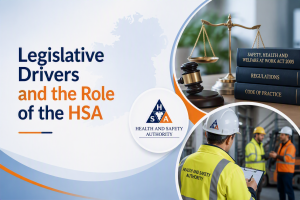
Legislative Drivers and the Role of the HSA
The Health and Safety Authority (HSA) acts as the primary statutory body responsible for monitoring and enforcing workplace standards across the country. A central requirement for every Irish business is the Safety Statement, a live document that should be based on a thorough risk assessment. The HSA’s enforcement activity is significant; in 2025, the authority conducted 11,974 inspections and investigations. These efforts resulted in 22 prosecutions and total fines amounting to €2.468 million. For organisations and directors, the consequences of non-compliance extend beyond financial penalties. They include prohibition notices that can halt operations and, more importantly, a breakdown in employee trust that can take years to rebuild.
The Professional Skills Gap in the Irish Market
Ireland currently faces a critical shortage of qualified safety professionals, particularly within the pharmaceutical, logistics, and construction sectors. The urgency is underscored by a shortage of safety staff and a corresponding sharp rise in workplace fatalities, which reached 58-61 deaths in 2025, the highest number since 2007. Employers are looking for more than basic certification; they require leaders who understand complex regulatory changes. This includes the 2026 Code of Practice for Chemical Agents which introduces stricter exposure limits for lead and diisocyanatos. To bridge this gap, when looking at the broad range of health and safety courses ireland you must consider core competencies like risk control, incident investigation, and the ability to influence safety behaviour at all levels of an organisation.
Navigating the Qualification Framework: From Foundation to Professional Diploma
Understanding the hierarchy of health and safety courses in Ireland is essential for professionals who want to progress beyond entry-level roles and compliance to a successful career in health and safety management.
One of the key advantages for Irish learners studying the right health and safety course is that qualification frameworks can be compared internationally across Ireland, the UK, Europe, and beyond. Ireland’s National Framework of Qualifications (NFQ) is aligned with the European Qualifications Framework (EQF), and QQI works closely with qualifications authorities across the UK to support comparisons between Irish and UK qualification levels. This helps employers, universities, and professional bodies understand the level and standard of qualifications achieved in different jurisdictions.
For learners seeking internationally recognised qualifications, OTHM is a specialist awarding organisation recognised by Ofqual (the Office of Qualifications and Examinations Regulation). Just as QQI provides quality assurance and recognition for qualifications in Ireland, Ofqual regulates qualifications in England, giving learners and employers confidence that OTHM qualifications meet recognised academic and professional standards.
Achieving a recognised qualification is far more than obtaining a certificate. It is about developing the skills needed to manage workplace risks, improve organisational performance, and create safer working environments. Modern health and safety courses in Ireland often incorporate internationally recognised standards such as ISO 45001, preparing learners to implement safety management systems in different industries. For many professionals, progression towards IOSH membership (Institution of Occupational Safety and Health) represents an important milestone, providing evidence of competence at a level and offering real career opportunities.
Strategic Career Progression: Transitioning into a Safety Role
Transitioning into a dedicated safety role is one of the most rewarding career shifts for professionals in high-risk sectors. Many current Safety Officers began their journeys in technical backgrounds, where they developed an intuitive understanding of operational hazards. By layering a formal qualification on top of practical experience, they achieve what we call “earned authority.” This unique combination ensures you aren’t just quoting the Safety, Health and Welfare at Work Act 2005; you’re applying it with the credibility of someone who has walked the shop floor. This evolution is further solidified through membership to bodies like IOSH, which requires a commitment to continuous professional development (CPD) to remain at the forefront of the industry.
Step-by-Step Guide to Becoming a Safety Officer
Building a successful career in safety requires a methodical approach to both education and experience. Follow these steps to transition effectively:
Step 1: Obtain a recognised Level 6 qualification. Ensure the programme is accredited by a body like IOSH to guarantee employer recognition and a clear path to professional membership.
Step 2: Gain practical experience. Volunteer for safety-related tasks, such as conducting audits or assisting with risk assessments in your current role, to gain documented workplace experience.
Step 3: Develop your soft skills. Effective safety management depends on your ability to resolve conflicts and use persuasive communication to influence workplace culture.
Step 4: Network within the community. Engage with the Irish safety community via professional associations to stay informed about local industry trends and job opportunities.
The Importance of Workplace-Focused Learning
Irish employers increasingly prioritise candidates who demonstrate the discipline to study whilst maintaining their professional responsibilities. This “blended” approach allows you to use your own workplace as a living laboratory. Instead of learning in a vacuum, you apply course theories directly to your daily environment, solving real-world problems as you learn. CMI Ireland’s tutor-led approach is specifically designed to support this. Their expert practitioners provide the guidance needed to turn academic assignments into actionable safety improvements for your organisation.
Empowering Your Professional Future in Safety Leadership
The Irish safety landscape is evolving at a rapid pace. As we have explored, the role of a Safety Officer has transitioned from a basic compliance function into a strategic advisory position that is central to modern ESG and sustainability goals. To thrive in this new environment, you need a qualification that balances academic rigour with real-world application. By choosing the high-quality health and safety courses Ireland offers through recognised providers, you aren’t just gaining a certificate; you’re building the “earned authority” needed to influence workplace culture and protect lives.
Choosing the Right Institute for Professional Success
Selecting from the vast array of health and safety courses in Ireland is a strategic decision that will reshape your professional reputation for years to come. To ensure you achieve the highest return and make the right decision it is important to evaluate potential providers against three critical pillars: global accreditation, the calibre of tutor expertise, and the flexibility of the learning model.
One such institute, CMI Communications & Management Institute, School of Environmental Health & Safety has established itself as a specialist bridge between academic theory and application of workplace skills. By focusing on IOSH-recognised and Ofqual-regulated OTHM diplomas, they ensure their graduates possess the credentials that top-tier Irish employers’ demand. CMI ensures that learners gain qualifications that are respected by employers and provide immediate health and safety career progression.
Technician and Professional Diploma Levels (Level 3-6)
For those beginning a career in health and safety, an entry-level technical certificate provides the essential knowledge and skills needed to transition into a formal safety role. In Ireland, a recognised introductory health and safety qualification offers the breadth and depth of learning required to support applications for Technical IOSH membership and entry into junior health and safety positions across a wide range of industries.
For site supervisors, team leaders, and individuals seeking to develop their health and safety expertise, foundation-level qualifications provide a valuable introduction. The OTHM Level 3 Technical Certificate in Occupational Health & Safety is designed specifically for those who are new to the profession and may have no previous academic background in health and safety. The programme develops a strong understanding of core health and safety principles, such as to hazard identification, risk assessment, and risk control measures. It provides a solid foundation for career progression and serves as an excellent stepping stone to higher-level professional qualifications in occupational health and safety.
Professional Health and Safety courses in Ireland: Level 6 and Level 7 Explained
Choosing between Level 6 and Level 7 health and safety courses in Ireland depends largely on your desired career trajectory and current experience. The OTHM Level 6 Diploma in Occupational Health and Safety is the industry standard for those aspiring to become Safety Officers. It provides the technical depth required to apply for Certified IOSH membership and move into dedicated safety roles. In contrast, the Level 7 Diploma in Occupational Health & Safety Management is tailored for those moving into senior management focusing on the leadership needed to drive continuous health and safety improvement.
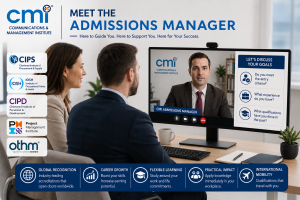
Both levels offer a significantly faster route to qualification than undergraduate degrees which typically take up to a year part time rather than years to complete. If you’re unsure which level aligns with your current experience, you can find specific breakdowns of career pathways at the CMI School of Health and Safety School. Contact their Admissions team for guidance on choosing the correct health and safety course.
Enjoy flexible, Industry-Led Education
CMI “Live Virtual Class” model distinguishes CMI Communications & Management Institute from traditional distance learning by providing a real-time, interactive classroom experience. This format allows professionals nationwide to engage directly with peers and tutors without the need for a physical commute. Crucially, CMI Communications & Management Institute tutors are active industry practitioners. They bring current Irish case studies into every session, ensuring you learn how to handle modern challenges like the 2026 Code of Practice for Chemical Agents. This practical focus is why CMI Communications & Management Institute graduates enjoy such high recognition across the pharmaceutical, construction, and public service sectors. Employers value the fact that our students can implement safety improvements within their organisations from their very first week of study.
Learning the right way: No Exam approach
CMI adopts a no-exam assessment approach, allowing learners to demonstrate their understanding through assignments rather than high-pressure examinations. Their programmes utilise a formative assessment and feedback model, where learners receive constructive feedback throughout their studies. If a submission does not yet meet the required standard, it is classified as “Not Yet Achieved”, and learners are provided with clear guidance on the areas requiring improvement. This supportive approach encourages continuous development throughout their studies, helps you build competence in a step by step approach.
Success in this field requires more than just a certificate; it requires the confidence to lead, which is only gained through a supportive and expert-led educational environment.
Taking the Next Step in Your Career
Future-proofing your career means evaluating your current skill set against the shifting needs of the 2026 market. The role of the Safety Officer is no longer a siloed function; it’s increasingly merging with sustainability, ESG reporting, and employee mental wellbeing. To remain a strategic asset to your board, you must choose a qualification path that reflects these broader corporate goals. We encourage you to look beyond basic compliance and aim for a leadership trajectory that offers both personal growth and professional security. The path to becoming a senior safety leader is clear, and it begins with the right educational foundation. Contact CMI Communications & Management Institute today to discuss your career path and discover which professional diploma aligns with your long-term ambitions.
CMI Ireland is committed to supporting professional advancement as a centre of excellence providing IOSH Accredited programmes. Their programmes are delivered by expert tutors who are active industry practitioners, ensuring that every lesson is grounded in current Irish regulations and case studies. With flexible live virtual classes designed specifically for working professionals, you can achieve your career goals whilst maintaining your workplace commitments.
Whether you’re targeting a Level 6 Diploma for entry-level success or a Level 7 for senior management, the right guidance is essential. Enquire about their Health and Safety Diplomas today to begin your journey toward a secure and rewarding professional future.
What is the best health and safety course for a career change in Ireland?
The OTHM Level 6 Diploma in Occupational Health and Safety is widely considered the premier choice for professionals seeking a career change. It provides the technical depth required by Irish employers whilst offering a direct route to Graduate IOSH membership. This qualification effectively bridges the gap between your previous industry experience and the specific regulatory requirements of a safety professional.
Is a Level 6 Health and Safety Diploma sufficient to become a Safety Officer?
Yes, a Level 6 Diploma is the recognised benchmark for those seeking to work as a Safety Officer in Ireland. While a Level 7 or higher qualification may be preferred for senior management or specialised consultancy roles, Level 6 provides the foundational expertise to manage workplace risks effectively. It satisfies the competency requirements for most safety practitioner roles across construction, manufacturing, and the public sector.
How long does it take to complete a professional health and safety course?
Professional health and safety courses typically take between six and ten months to complete, depending on the specific level of the diploma. Unlike traditional three-year undergraduate degrees, these intensive programmes are designed for rapid career progression. This accelerated timeframe allows you to gain a recognised qualification and apply for professional membership within a single academic year whilst continuing to work.
Can I study for an IOSH-accredited qualification online whilst working?
You can certainly study for an IOSH-accredited qualification through flexible live virtual classes that accommodate a full-time work schedule. This model allows you to attend interactive sessions from any location whilst benefiting from the real-time expertise of industry practitioners. Many health and safety courses ireland professionals choose are structured this way to ensure students can apply their learning immediately within their own workplace.
Do Irish employers recognise UK-based professional health and safety certifications?
Irish employers highly value UK-based certifications from bodies like OTHM and IOSH because they are mapped to international standards such as ISO 45001. Since health and safety legislation in Ireland and the UK shares a common foundation in EU directives, these qualifications are easily transferable. This recognition is particularly strong in multinational sectors like pharma and logistics, where global safety standards are the operational norm.
We use cookies on our website to give you the most relevant experience by remembering your preferences and repeat visits. By clicking “Accept All”, you consent to the use of ALL the cookies. However, you may visit "Cookie Settings" to provide a controlled consent.
This website uses cookies to improve your experience while you navigate through the website. Out of these, the cookies that are categorized as necessary are stored on your browser as they are essential for the working of basic functionalities of the website. We also use third-party cookies that help us analyze and understand how you use this website. These cookies will be stored in your browser only with your consent. You also have the option to opt-out of these cookies. But opting out of some of these cookies may affect your browsing experience.
Necessary cookies are absolutely essential for the website to function properly. These cookies ensure basic functionalities and security features of the website, anonymously.
Cookie
Duration
Description
cookielawinfo-checkbox-analytics
11 months
This cookie is set by GDPR Cookie Consent plugin. The cookie is used to store the user consent for the cookies in the category "Analytics".
cookielawinfo-checkbox-functional
11 months
The cookie is set by GDPR cookie consent to record the user consent for the cookies in the category "Functional".
cookielawinfo-checkbox-necessary
11 months
This cookie is set by GDPR Cookie Consent plugin. The cookies is used to store the user consent for the cookies in the category "Necessary".
cookielawinfo-checkbox-others
11 months
This cookie is set by GDPR Cookie Consent plugin. The cookie is used to store the user consent for the cookies in the category "Other.
cookielawinfo-checkbox-performance
11 months
This cookie is set by GDPR Cookie Consent plugin. The cookie is used to store the user consent for the cookies in the category "Performance".
viewed_cookie_policy
11 months
The cookie is set by the GDPR Cookie Consent plugin and is used to store whether or not user has consented to the use of cookies. It does not store any personal data.
Functional cookies help to perform certain functionalities like sharing the content of the website on social media platforms, collect feedbacks, and other third-party features.
Performance cookies are used to understand and analyze the key performance indexes of the website which helps in delivering a better user experience for the visitors.
Analytical cookies are used to understand how visitors interact with the website. These cookies help provide information on metrics the number of visitors, bounce rate, traffic source, etc.
Advertisement cookies are used to provide visitors with relevant ads and marketing campaigns. These cookies track visitors across websites and collect information to provide customized ads.

 As Irish employers face increasing safety responsibilities and skills shortages, qualified health and safety professionals are the most sought-after specialists across a range of high-demand sectors like construction, manufacturing, and pharmaceutical organisation’s.
 The Evolving Landscape of Occupational Health and Safety in Ireland
 The
The  Ireland currently faces a critical shortage of qualified safety professionals, particularly within the pharmaceutical, logistics, and construction sectors. The urgency is underscored by a shortage of safety staff and a corresponding sharp rise in workplace fatalities, which reached
  Understanding the hierarchy of health and safety courses in Ireland is essential for professionals who want to progress beyond entry-level roles and compliance to a successful career in health and safety management.
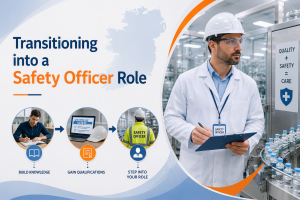 Transitioning into a dedicated safety role is one of the most rewarding career shifts for professionals in high-risk sectors. Many current Safety Officers began their journeys in technical backgrounds, where they developed an intuitive understanding of operational hazards. By layering a formal qualification on top of practical experience, they achieve what we call “earned authority.” This unique combination ensures you aren’t just quoting the
 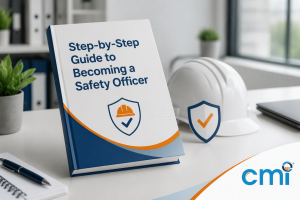 Building a successful career in safety requires a methodical approach to both education and experience. Follow these steps to transition effectively: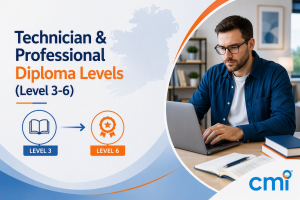
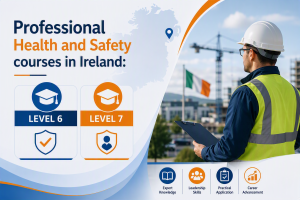 Choosing between Level 6 and Level 7 health and safety courses in Ireland depends largely on your desired career trajectory and current experience. The
  CMI “Live Virtual Class” model distinguishes CMI Communications & Management Institute from traditional distance learning by providing a real-time, interactive classroom experience. This format allows professionals nationwide to engage directly with peers and tutors without the need for a physical commute. Crucially, CMI Communications & Management Institute tutors are active industry practitioners. They bring current Irish case studies into every session, ensuring you learn how to handle modern challenges like the 2026 Code of Practice for Chemical Agents. This practical focus is why CMI Communications & Management Institute graduates enjoy such high recognition across the pharmaceutical, construction, and public service sectors. Employers value the fact that our students can implement safety improvements within their organisations from their very first week of study.
 CMI adopts a no-exam assessment approach, allowing learners to demonstrate their understanding through assignments rather than high-pressure examinations. Their programmes utilise a formative assessment and feedback model, where learners receive constructive feedback throughout their studies. If a submission does not yet meet the required standard, it is classified as “Not Yet Achieved”, and learners are provided with clear guidance on the areas requiring improvement. This supportive approach encourages continuous development throughout their studies, helps you build competence in a step by step approach.
 Future-proofing your career means evaluating your current skill set against the shifting needs of the 2026 market. The role of the Safety Officer is no longer a siloed function; it’s increasingly merging with sustainability, ESG reporting, and employee mental wellbeing. To remain a strategic asset to your board, you must choose a qualification path that reflects these broader corporate goals. We encourage you to look beyond basic compliance and aim for a leadership trajectory that offers both personal growth and professional security. The path to becoming a senior safety leader is clear, and it begins with the right educational foundation.
  CMI Ireland is committed to supporting professional advancement as a centre of excellence providing IOSH Accredited programmes. Their programmes are delivered by expert tutors who are active industry practitioners, ensuring that every lesson is grounded in current Irish regulations and case studies. With flexible live virtual classes designed specifically for working professionals, you can achieve your career goals whilst maintaining your workplace commitments.


