How to Become a Safety Officer in Ireland: The Essential 2026 Career Roadmap from Entry-Level to Chartered Status
Researching how to become a Safety Officer in Ireland, is the biggest challenge facing many people interested in progressing their career in health and safety. It is not about finding a course but understanding which qualification will genuinely support long-term career progression.
With multiple providers, different levels, and a range of certificates and diplomas available, it can be difficult to distinguish between programmes that employers value and those that offer limited recognition. At the same time, Irish organisations are placing greater emphasis on risk management, compliance and workplace wellbeing, creating strong demand for those who possess skills and qualifications in these areas.
The good news is that there is a clear pathway into the occupational health and safety profession. By selecting the right level and understanding the progression routes through professional bodies such as IOSH and CMI Ireland, you can build a successful and rewarding career in occupational health and safety.
This guide explains how to become a Safety Officer in Ireland, outlining the qualifications employers expect and the differences between Level 6 and Level 7 programmes. We will explore the steps that can help you transition from entry-level Safety officer to professional and chartered status.
Key Takeaways
Understand the evolution of the safety officer role from simple compliance to a strategic leadership position within the Irish regulatory framework.
Identify the specific educational requirements and learn how to become a safety officer ireland by selecting the correct Level 6 or Level 7 qualification.
Recognise the value of IOSH-accredited programmes in achieving global professional recognition and employer trust.
Follow a structured five-step roadmap designed to help career changers and professionals secure their first role in the health and safety sector.
Discover the long-term benefits of continuous professional development and the journey toward becoming a Chartered Safety and Health Practitioner (CMIOSH).
Table of Contents
The Critical Mandate: What Defines a Safety Officer in Ireland?
Educational Pathways: Navigating NFQ Levels and IOSH Accreditation
A Strategic Roadmap: 5 Steps to Securing Your First Safety Role
Advancing Your Trajectory: Professional Membership and Specialisation
The Critical Mandate: What Defines a Safety Officer in Ireland?
The safety officer serves as the primary guardian of an organisation’s most valuable asset: its people. Historically, the role was often viewed through the narrow lens of ‘tick-box’ compliance; however, the modern professional operates as a strategic risk manager. If you are exploring how to become a safety officer ireland, you must recognise that your future remit extends far beyond basic inspections. You will be tasked with embedding a culture of safety that aligns with the broader discipline of Occupational safety and health, ensuring that every operational decision considers human wellbeing alongside commercial output.
Legally, the necessity of this role is anchored in the Safety, Health and Welfare at Work Act 2005. This legislation mandates that every Irish employer takes proactive steps to prevent workplace injury and ill-health. As a practitioner, your core responsibilities involve conducting rigorous risk assessments, maintaining the Safety Statement, and performing detailed accident investigations to prevent recurrence. It’s a role that demands both technical knowledge and the ability to influence behaviour at every level of the company.
The Influence of the Health and Safety Authority (HSA)
The Health and Safety Authority (HSA) acts as the national regulator, providing the framework within which all Irish businesses must operate. Safety officers are the vital link between these state-mandated codes of practice and daily workplace activities. Central to this relationship is the Safety Statement. This foundational document is not a static folder on a shelf; it is a dynamic plan that details how a specific company manages safety. Your ability to translate HSA guidelines into actionable site-specific policies is what defines your value to an employer.
Industry Demand and Career Stability
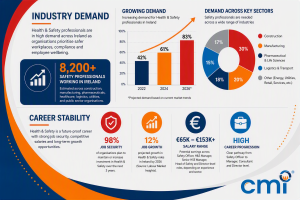
The demand for safety professionals remains exceptionally high across Ireland’s core economic drivers, specifically construction, pharmaceuticals, and logistics. As of 2026, the Irish safety sector faces a critical shortage of qualified practitioners. There is a shortage of competent safety officers’ experienced in digital compliance tools and traditional risk management frameworks. This skills gap shortage creates a unique opportunity for graduates of professional safety officer courses. Understanding how to become a safety officer in ireland involves recognising that the role is no longer just about physical site safety; it’s about strategic oversight.
With average salaries for safety officers in Ireland ranging from €55,203 to €68,202 as of 2026, the financial rewards match the high level of responsibility. This shift reflects a global move toward sustainability, making the Environmental, Health & Safety School at CMI Ireland an essential gateway for those looking to future-proof their careers.
Educational Pathways: Navigating NFQ Levels and IOSH Accreditation
Selecting the right qualification is the most pivotal decision you’ll make when considering how to become a safety officer ireland. The National Framework of Qualifications (NFQ) provides a structured hierarchy that helps employers understand the depth of your expertise. Whilst a Level 3 award might provide a basic introduction, it’s the Level 6 and Level 7 diplomas that carry the professional weight required for industry roles. For career changers, a workplace-focused approach often proves superior to purely academic routes; it allows you to apply safety frameworks directly to real-world scenarios while you study.
This practical focus is essential because safety is a lived discipline, not just a theoretical one. Employers in Ireland’s high-growth sectors prioritises candidates who can demonstrate an immediate grasp of risk management. By choosing a programme that blends academic rigour with practitioner-led insights, you bridge the gap between knowing the law and implementing it effectively on a live site.
OTHM Level 6 vs Level 7 Diplomas
The Level 6 Diploma is widely recognised as the primary qualification for those seeking to work as a Safety Officer. It provides the technical foundation needed to manage daily risks and ensure site compliance. In contrast, the Level 7 Diploma is designed for those aiming for Safety Management or Director positions, focusing on strategic leadership and corporate policy development. Both levels are instrumental in securing Certified Membership (CertIOSH), which is a vital milestone for your professional credibility and earning potential.
The Value of Professional Accreditation
In the Irish and UK markets, IOSH accreditation is regarded as the gold standard. Holding a qualification recognised by the Institution of Occupational Safety and Health demonstrates that your skills meet global benchmarks. Whilst bodies like QQI provide essential national standards, IOSH membership is what truly unlocks international career mobility and higher-tier roles. At CMI Ireland, these programmes are delivered by expert tutors who ensure your learning is aligned with the latest Health and Safety Authority (HSA) requirements. If you’re unsure which level fits your current experience, you can speak with a career advisor to map out your individual progression.
A Strategic Roadmap: 5 Steps to Securing Your First Safety Role
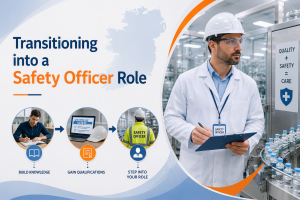
Transitioning into a new profession whilst balancing current work commitments requires a methodical approach. For many career changers, the primary challenge isn’t just the study itself, but the transition from theoretical knowledge to active site management. CMI Ireland’s flexible online delivery ensures you can maintain your current income whilst building the specific credentials needed for your next move. Success in this field depends on adopting a ‘practitioner’ mindset early, where you view every workplace scenario through the lens of risk mitigation and leadership.
Step 1 & 2: Foundational Knowledge and Certification
Your journey begins with securing a recognised qualification that meets industry standards. If you are serious about how to become a safety officer ireland, enrolling directly in an OTHM Level 6 Diploma is often the most efficient route for those with some workplace experience.
Once your studies commence, apply for student membership with the Institution of Occupational Safety and Health (IOSH). This membership provides immediate access to a wealth of technical resources and networking opportunities that are invaluable for a novice. Focus your initial efforts on mastering Irish safety legislation and risk assessment methodologies, as these form the bedrock of your daily responsibilities.
Step 3, 4 & 5: Experience, Networking, and Application
Securing your first role often involves proving your value before you even leave your current organisation. Look for opportunities to serve as a ‘safety representative’ or assist with internal safety audits. This allows you to build a practical portfolio that includes sample risk assessments and documented safety observations. When you begin your external job search, your CV must be a reflection of your technical readiness. Highlight your familiarity with international standards such as ISO 45001 and your understanding of HSA compliance requirements.
Technical knowledge is only half the battle. To excel as a safety professional, you must develop robust ‘soft skills’, particularly in communication and conflict resolution. You will frequently need to persuade staff to change their behaviour or justify safety expenditures to management. Demonstrating leadership and the ability to influence others will set you apart from other candidates. If you need assistance determining which step of the roadmap fits your current experience, contact the CMI admissions team for a professional consultation. Understanding how to become a safety officer ireland is about more than just a certificate; it is about building a credible, expert-led persona that employers can trust.
Advancing Your Trajectory: Professional Membership and Specialisation
Securing your initial appointment is merely the first milestone in a career defined by continuous growth and increasing influence. Whilst foundational diplomas provide the entry point, the long-term trajectory for those who master how to become a safety officer ireland involves deep specialisation and professional peer recognition. CMI Ireland’s expert tutors provide the mentorship needed to navigate these advanced stages, offering practitioner-led insights that bridge the gap between academic study and executive-level safety leadership. In the current market, professionals are increasingly diversifying their expertise into emerging areas such as Environmental safety, Mental Health at Work, and ESG (Environmental, Social, and Governance) reporting to meet the demands of modern corporate responsibility.
The Path to Chartered Status
Achieving Chartered status (CMIOSH) represents the pinnacle of professional standing in the Irish safety sector. This journey requires completing the Initial Professional Development (IPD) process, a structured period of self-assessment and evidence gathering that validates your practical competence. Transitioning from Graduate (GradIOSH) to Chartered status significantly enhances your authority and earning potential. ; According to recent industry data, senior-level positions in 2026 frequently command salaries ranging from €115,000 to €153,002. CMIOSH is the ultimate benchmark for safety leadership in Ireland, signalling to global employers that you possess the strategic expertise to manage complex organisational risks at the highest level.
Future Outlook: Safety in the Digital Age
The landscape of 2026 is increasingly shaped by digital transformation, where AI and real-time data analytics are revolutionising incident prevention. Safety professionals now utilise predictive modelling to identify hazards before they manifest, a shift that requires a blend of technical safety knowledge and digital literacy. We are also seeing a significant overlap between Facilities Management and health and safety, as buildings become ‘smarter’ and more integrated. Your role is no longer confined to the site floor; it is central to the sustainable business landscape, ensuring that human wellbeing remains the priority in an automated, high-efficiency world. Understanding how to become a safety officer ireland today means preparing for a future where you are a vital architect of corporate resilience and a key partner in sustainable development.
Securing Your Future in Irish Safety Leadership
The transition from a regulatory observer to a strategic business partner is the defining shift for safety professionals in 2026. By researching how to become a safety officer ireland, you’ve identified that the combination of NFQ-aligned education and IOSH accreditation is the only reliable path to long-term career stability. Whether you are aiming for site-level management or corporate EHS leadership, your success depends on bridging the gap between legislative knowledge and practical, site-specific application. The industry now demands leaders who can integrate digital compliance with human-centric safety cultures.
The CMI School of Health and Safety Excellence enjoys a 98% student satisfaction rate, from graduates. CMI Ireland are dedicated to professional career advancement. Their programmes are delivered by industry practitioner tutors who ensure your learning is workplace-focused and immediately impactful. Take the first step toward your new career trajectory today.
Do I need a university degree to become a safety officer in Ireland?
You don’t necessarily need a four-year university degree to enter this profession. Many successful practitioners choose accredited Level 6 or Level 7 diplomas because they offer a faster, more workplace-focused route into the industry. These qualifications are fully recognised by employers and professional bodies, providing the technical expertise required without the commitment of full-time campus attendance.
How long does it take to qualify as a health and safety officer?
Most students complete a professional Level 6 diploma within twelve to fifteen months. This timeline allows you to gain the necessary certification to apply for junior roles whilst you continue to build your practical experience. If you’re progressing toward management with a Level 7 qualification, you should expect an additional twelve months of advanced study.
What is the difference between a Level 6 and Level 7 Health and Safety Diploma?
The primary difference lies in the level of responsibility and strategic oversight. A Level 6 diploma focuses on the technical skills needed for site-level inspections, risk assessments, and daily compliance. A Level 7 diploma is designed for those moving into senior management or director roles; the focus shifts toward corporate policy, safety culture leadership, and high-level risk strategy
Can I study for my health and safety qualifications online whilst working?
Yes, researching how to become a safety officer ireland will show that flexible learning is highly achievable whilst maintaining full-time employment. CMI Ireland provides flexible online delivery and live virtual classes, allowing you to engage with expert practitioners from any location. This model is specifically designed for career changers who need to balance professional development with existing responsibilities
What is IOSH and why is it important for safety officers in Ireland?
IOSH is the Institution of Occupational Safety and Health, the world’s leading professional body for safety practitioners. It’s vital because IOSH accreditation acts as a global seal of quality for your qualifications. Membership grades signal to Irish employers that your skills meet rigorous international standards and that you’re committed to the highest levels of professional conduct and development.
What is the typical salary for a safety officer in Ireland in 2026?
In 2026, the average salary for a safety officer in Ireland typically ranges between €55,203 and €78,202 per year. Entry-level positions generally start between €35,000 and €50,000. As you gain experience and move into senior or chartered roles, your earning potential increases significantly; top-tier management positions can reach up to €153,002 depending on the specific sector and location
We use cookies on our website to give you the most relevant experience by remembering your preferences and repeat visits. By clicking “Accept All”, you consent to the use of ALL the cookies. However, you may visit "Cookie Settings" to provide a controlled consent.
This website uses cookies to improve your experience while you navigate through the website. Out of these, the cookies that are categorized as necessary are stored on your browser as they are essential for the working of basic functionalities of the website. We also use third-party cookies that help us analyze and understand how you use this website. These cookies will be stored in your browser only with your consent. You also have the option to opt-out of these cookies. But opting out of some of these cookies may affect your browsing experience.
Necessary cookies are absolutely essential for the website to function properly. These cookies ensure basic functionalities and security features of the website, anonymously.
Cookie
Duration
Description
cookielawinfo-checkbox-analytics
11 months
This cookie is set by GDPR Cookie Consent plugin. The cookie is used to store the user consent for the cookies in the category "Analytics".
cookielawinfo-checkbox-functional
11 months
The cookie is set by GDPR cookie consent to record the user consent for the cookies in the category "Functional".
cookielawinfo-checkbox-necessary
11 months
This cookie is set by GDPR Cookie Consent plugin. The cookies is used to store the user consent for the cookies in the category "Necessary".
cookielawinfo-checkbox-others
11 months
This cookie is set by GDPR Cookie Consent plugin. The cookie is used to store the user consent for the cookies in the category "Other.
cookielawinfo-checkbox-performance
11 months
This cookie is set by GDPR Cookie Consent plugin. The cookie is used to store the user consent for the cookies in the category "Performance".
viewed_cookie_policy
11 months
The cookie is set by the GDPR Cookie Consent plugin and is used to store whether or not user has consented to the use of cookies. It does not store any personal data.
Functional cookies help to perform certain functionalities like sharing the content of the website on social media platforms, collect feedbacks, and other third-party features.
Performance cookies are used to understand and analyze the key performance indexes of the website which helps in delivering a better user experience for the visitors.
Analytical cookies are used to understand how visitors interact with the website. These cookies help provide information on metrics the number of visitors, bounce rate, traffic source, etc.
Advertisement cookies are used to provide visitors with relevant ads and marketing campaigns. These cookies track visitors across websites and collect information to provide customized ads.

 Researching how to become a Safety Officer in Ireland, is the biggest challenge facing many people interested in progressing their career in health and safety. It is not about finding a course but understanding which qualification will genuinely support long-term career progression.
 The safety officer serves as the primary guardian of an organisation’s most valuable asset: its people. Historically, the role was often viewed through the narrow lens of ‘tick-box’ compliance; however, the modern professional operates as a strategic risk manager. If you are exploring how to become a safety officer ireland, you must recognise that your future remit extends far beyond basic inspections. You will be tasked with embedding a culture of safety that aligns with the broader discipline of Occupational safety and health, ensuring that every operational decision considers human wellbeing alongside commercial output.
 The Health and Safety Authority (HSA) acts as the national regulator, providing the framework within which all Irish businesses must operate. Safety officers are the vital link between these state-mandated codes of practice and daily workplace activities. Central to this relationship is the Safety Statement. This
  With average salaries for safety officers in Ireland ranging from €55,203 to €68,202 as of 2026, the financial rewards match the high level of responsibility. This shift reflects a global move toward sustainability, making the
  Transitioning into a new profession whilst balancing current work commitments requires a methodical approach. For many career changers, the primary challenge isn’t just the study itself, but the transition from theoretical knowledge to active site management. CMI Ireland’s
 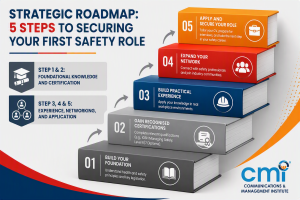 Your journey begins with securing a recognised qualification that meets industry standards. If you are serious about how to become a safety officer ireland, enrolling directly in an OTHM Level 6 Diploma is often the most efficient route for those with some workplace experience.
 Securing your initial appointment is merely the first milestone in a career defined by continuous growth and increasing influence. Whilst foundational diplomas provide the entry point, the long-term trajectory for those who master how to become a safety officer ireland involves deep specialisation and professional peer recognition.
  The landscape of 2026 is increasingly shaped by digital transformation, where AI and real-time data analytics are revolutionising incident prevention. Safety professionals now utilise predictive modelling to identify hazards before they manifest, a shift that requires a blend of technical safety knowledge and digital literacy. We are also seeing a significant overlap between
  The CMI School of Health and Safety Excellence enjoys a


