Mastering Procurement and Supply Chain Management: A Guide to Professional Courses in Ireland
Share This Post
Mastering Procurement and Supply Chain Management: A Guide to Professional Courses in Ireland
Did you know that 64% of Irish procurement and supply chain logistics operators expect to increase their headcount this year? However, many struggle to find candidates with the right strategic credentials?
Without a formal qualification, your career path can feel frustratingly stuck. It’s a common challenge to have procurement and supply chain experience but lack the formal recognition that opens doors for you.
By exploring the right procurement and supply chain courses from Ireland, you can finally align your practical skills with a globally recognised certification that commands respect in the modern workplace.
This guide is designed to help you move from being an experienced professional to a certified industry leader. We’ll demystify the complexities of NFQ levels and CIPS and IoSCM accreditation, ensuring you choose a path that provides maximum value to your career goals. You’ll discover how flexible, industry-aligned training can help you secure a higher-level management role and develop your digital fluency, all whilst maintaining your current 9-to-5 commitments. Let’s explore how you can turn your practical experience into a prestigious professional asset.
Key Takeaways
Understand the strategic shift from simple cost-cutting to value creation and risk resilience within the context of 2026 global trade.
Identify the most effective path for your career by navigating the various procurement and supply chain courses ireland provides, from short modules to NFQ-aligned diplomas.
Compare the practical advantages of professional diplomas against traditional academic degrees to find a learning model that fits your busy schedule.
Master high-level competencies such as strategic sourcing and category management to transition from a purchasing role to a senior management position.
Discover how the specialised, flexible training models at CMI Communications & Management Institute Ltd. bridge the gap between academic theory and practical workplace application.
The evolving landscape of Procurement and Supply in Ireland
Ireland’s position in 2026 global trade has never been more critical. As a primary gateway to Europe, the nation has seen a massive expansion in its industrial footprint, with national take-up in the logistics sector reaching 326,400 sq. m in 2025 alone. Within this high-growth environment, Supply Chain Management has evolved from a tactical back-office function into a strategic engine for innovation. It’s no longer just about moving goods from point A to point B; it’s about the sophisticated orchestration of data, relationships, and value across a globalised network.
The traditional playbook that prioritised cost-cutting above all else is now obsolete. Organisations in Ireland have shifted their focus toward value creation and risk resilience. This transition is driven by the need to build “Total Value” models that integrate customer excellence with operational stability. In a market where logistics real estate investment grew by 371% in 2025, the scale of operations demands professionals who can manage complex supplier ecosystems whilst protecting the bottom line from global volatility.
Digital transformation is accelerating this evolution. We’ve entered the era of AI-native procurement, where workflows are designed with automation as the primary engine. Because these systems require a high level of technical and strategic fluency, formal qualifications have become a mandatory prerequisite for senior roles in Ireland. Relying on legacy methods won’t secure a seat at the management table. Ambitious professionals are increasingly turning to procurement and supply chain courses Ireland to gain the accredited expertise required to lead these tech-driven departments.
Why do Industry Standards Matter for Irish Professionals?
Professional benchmarks provide the credibility you need to advance in a competitive market. Doing accredited procurement and supply chain courses Ireland ensure you’re operating at a global standard, protecting your organisation against supply chain volatility. There’s also a significant shift towards “green” procurement. Understanding the circular economy and ESG (Environmental, Social, and Governance) compliance is now a core competency, as Irish regulations demand stricter transparency in sourcing and ethical operations.
What are the Skills Gap in Modern Logistics and Supply Chain?
Despite the sector’s growth, Ireland faces a persistent shortage of strategic procurement managers. Whilst “on-the-job” learning provides a foundation, it’s no longer sufficient for career progression into high-level leadership. The modern industry requires a deep understanding of the “resilient supply chain”-an agile network capable of anticipating disruptions and pivoting operations in real-time without sacrificing sustainability or service. Bridging this gap requires a structured educational approach that moves beyond daily purchasing tasks to focus on long-term enterprise value.
Navigating Procurement and Supply Chain Courses in Ireland
Selecting the ideal educational path requires a clear understanding of your career destination. Whilst short modules are excellent for addressing specific skill gaps like data analytics, comprehensive procurement and supply chain courses Ireland offers generally fall into three categories: professional diplomas, academic degrees, and specialised certificates. For the working professional, the professional diploma has emerged as a high-impact alternative to traditional university routes. These diploma programmes focus on the immediate application of strategic concepts, allowing you to implement new efficiencies in your workplace from week one.
Understanding NFQ Levels 6, 7, and 8
The National Framework of Qualifications (NFQ) provides a transparent way to measure the depth of a course. A Level 6 qualification is often the perfect entry point for those with one to two years of relevant experience who need formal recognition of their practical skills. This level covers the foundational mechanics of purchasing, supply chain management and logistics. In contrast, a level 7 and 8 delve into the strategic and managerial aspects of the industry. By integrating Strategic Procurement Management, Strategic Supply Chain Management, and Strategic Operations Management, a level 8 in Strategic Procurement on the NFQ in Ireland (comparable to level 6 in England RFQ) equips professionals with the knowledge and leadership skills to manage procurement as a strategic business function rather than an administrative purchasing activity.
Choosing the right level depends on your current trajectory. If you’re aiming for a senior management role, a strategic Level 6 or higher professional diploma provides the necessary academic weight without the multi-year commitment of a full degree.
Professional Diplomas vs Academic Degrees: Choosing Your Path
Choosing the right educational path is often the difference between a career that plateaus and one that accelerates. In the Irish market, the debate typically centres on whether to pursue a multi-year academic degree or a focused professional diploma. Whilst both have merits, the primary distinction lies in the speed of impact. Professional diplomas are designed to be completed in 8 to 11 months, whereas an MSc or undergraduate degree often demands a commitment of two to four years or more. For a professional working a 9-to-5 job, the shorter, intensive route often provides a far more immediate return on investment. Employers instantly recognise industry awarding bodies such as CIPS and IoSCM – Institute of Supply Chain Management and value the impact they provide to different roles within their organisation.
The curriculum focus also varies significantly between these two formats. Academic degrees often prioritise theoretical research and historical context, which is valuable for those pursuing careers in academia or high-level policy. In contrast, professional procurement and supply chain courses Ireland offered through specialised schools are built for the modern workplace. They focus on the “how-to” of commercial contracting and negotiation, ensuring you can apply new efficiencies to your current role within weeks of starting the programme. Organisations like IPICS, the Supply Chain Management Institute, frequently highlight how continuous, practical development is essential for staying relevant in an industry defined by rapid digital change.
When to Choose a Professional Diploma
If your goal is to secure a mid-to-senior management role without taking a two-year hiatus from the workforce, a professional diploma is your best option. These programmes are ideal for professionals who need immediate, actionable skills. At CMI Communications & Management Institute, their Procurement, Supply & Logistics School focuses specifically on bridging the gap between academic theory and workplace reality. This model allows you to maintain your career momentum whilst gaining the credentials required to be successful at job interviews and promotion. The flexibility of evening and online learning ensures that your education supports your career path rather than competing with it.
When an MSc or Degree Might Be Necessary
An MSc or a full degree might be the right choice if you intend to move into specialised academic research or if a specific employer has a rigid requirement for a Level 9 qualification. However, for the vast majority of procurement, supply chain and logistic job roles in the Irish private sector, the practical expertise gained through a diploma is often more highly valued. Consider this checklist before deciding:
Timeframe: Can you commit to 24+ months of study, or do you need a recognised qualification in under a year?
Application: Do you need to solve real-world supply chain issues tomorrow or in two years?
Flexibility: Does the course offer online or evening sessions that fit your 9-to-5 schedule?
Accreditation: Does the programme lead to a globally recognised certification like CIPS or IoSCM?
Timeframe: How Quickly Do You Need a Qualification?
One of the first questions to ask is how long you can realistically commit to studying. Some professional qualifications, such as certificate and diploma level programmes, can be completed within six to twelve months and provide a recognised credential that can quickly enhance employability. If your goal is to gain skills and achieve promotion opportunities in the short term, a shorter professional qualification may be the most practical route. If you are planning a long-term career in senior management, investing in a more extensive programme may provide greater future benefits.
Application: Immediate Practical Skills or Long-Term Development?
Consider how quickly you need to apply what you learn. Many supply chain professionals face daily challenges such as inventory shortages, supplier performance issues, rising transport costs, tariffs and demand forecasting problems. In these cases, a qualification that focuses on practical workplace application can deliver immediate value.
Procurement and supply chain courses Ireland offered by professional bodies such as CIPS and IoSCM are designed to bridge theory and practice, enabling learners to apply concepts directly to real-world supply chain operations. If you need solutions that can improve performance tomorrow, practical and industry-focused learning is often more beneficial than purely academic study.
Flexibility: Can the Course Fit Around Your Work and Personal Commitments?
For most working professionals, flexibility is a critical consideration.
Traditional classroom-based programmes may require in-person attendance, which can be difficult for those balancing employment, family commitments, or shift work. Online and blended learning options provide greater flexibility, allowing learners to study at their own pace while continuing to work full-time.
Before enrolling, check whether the programme offers:
Online learning options.
Evening or weekend classes.
Flexible start dates.
Access to recorded lectures and learning resources.
Tutor support outside standard working hours.
A course that fits your schedule will significantly increase your chances of successful completion.
The Role of CIPS, IoSCM and CMI Centre of Excellence
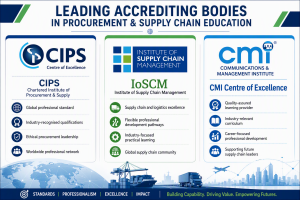
Global recognition serves as the ultimate currency in the supply chain sector. The Office of Government Procurement (OGP) emphasise the importance of upholding procurement regulations, codes of practise and ethics within the public sector. Holding an accredited qualification ensures your resume stands out and that you abide by good procurement practise. It signals you possess a verified level of competence. To ensure your education meets these rigorous benchmarks set by the public and private sector and government regulations, consider exploring the specialised diplomas at CMI Communications & Management Institute . These are designed to align with essential industry best practise upholding the standards required for procurement and supply chain professionals.
Professional diplomas bridge the gap between academic theory and the fast-paced reality of the Irish market. Unlike traditional degrees that may focus heavily on historical research, these courses are built around modern workplace challenges. With procurement and supply chain courses from Ireland, you’ll gain practical tools for contract management, ethical sourcing, and supplier relationships. This ensures you’re well prepared to deal with dynamic challenges that confront the procurement, supply chain and logistics sectors.
Accreditation: Will Employers Recognise the Qualification?
Not all qualifications carry the same weight with employers. Accreditation should be a key factor in your decision-making process. Qualifications awarded by recognised professional bodies demonstrate that the programme meets industry standards and provides relevant, up-to-date knowledge.
Two of the most respected organisations in the supply chain sector are:
Highly valued by employers across public and private sectors.
Provides a clear pathway from entry-level qualifications to Chartered Professional status. The Chartered Institute of Procurement & Supply (CIPS) is widely regarded as the gold standard, providing a framework that is respected by recruiters across the globe.
Internationally recognised provider of supply chain, logistics, procurement, and operations qualifications.
Offers flexible learning routes suitable for both new entrants and experienced professionals.
Delivered by CMI, a trusted partner in Ireland. Focuses on practical skills that can be applied directly within the workplace.
Choosing an accredited qualification can improve credibility, strengthen your CV, and enhance career progression opportunities both nationally and internationally.
Final Thoughts
The best supply chain qualification is not necessarily the highest-level qualification—it is the one that aligns with your career objectives, available study time, learning preferences, and professional ambitions. The CMI School of Supply Chain Management offers CIPS Diploma’s and IoSCM Diplomacourses.
There are benefits to talking to a course guidance professional in one of the Admissions departments of a busy educational institute like CMI Ireland. Benefits include:
Understand progression pathways, including opportunities to progress from certificate and diploma programmes to higher-level qualifications.
Explore career opportunities associated with different qualifications.
Clarify entry requirements and determine whether your existing qualifications and work experience meet the admission criteria.
Compare study options, including online, blended, part-time, and evening learning formats to find a programme that fits around work and family commitments.
Disclaimer: This article is intended for educational purposes and reflects industry knowledge and best practice available at the time of writing. CMI Ireland encourages readers to consult relevant professional bodies and regulatory sources for the most up-to-date guidance and requirements within their sector.
What is the difference between purchasing and procurement courses?
Purchasing courses focus on the transactional act of buying goods and services. Procurement courses are broader; they cover the strategic sourcing, negotiation, and long-term supplier relationship management required for senior roles. Understanding this distinction helps you choose a programme that matches your career goals, whether you’re managing daily orders or overseeing global supply networks that require a more analytical approach.
Are procurement and supply chain courses in Ireland available online?
Yes, most leading procurement and supply chain courses ireland provides are now available through flexible online models. These programmes typically use live virtual classrooms or recorded sessions to accommodate working professionals. This accessibility ensures that you can achieve industry-recognised certifications from any county in Ireland whilst maintaining your current 9-to-5 commitments and your personal responsibilities.
How long does it take to complete a professional diploma in supply chain management?
A professional diploma typically takes between 6 and 10 months to complete. This intensive timeframe is designed to deliver high-impact, practical skills without the multi-year commitment required by a traditional academic degree. It’s an ideal choice for professionals who need to see a rapid return on their educational investment and apply new strategic efficiencies in their workplace immediately.
What NFQ level is a professional diploma in procurement?
Professional diplomas in this field are generally aligned with Level 6 and Level 7 on the National Framework of Qualifications (NFQ). This level is highly respected by Irish employers as it demonstrates a thorough understanding of specialised knowledge and the ability to apply complex concepts in a professional environment. It provides a solid foundation for those aiming for mid-to-senior management positions within the logistics sector.
Is CIPS accreditation necessary for a procurement and supply career in Ireland?
Whilst not legally mandatory, CIPS accreditation is widely considered the gold standard by recruiters across the globe. Holding a CIPS-aligned qualification significantly increases your resume’s visibility and signals that you meet rigorous international standards. For many senior leadership roles in Ireland, particularly within multinational organisations, this certification is often a preferred prerequisite for successful candidates during the hiring process.
Is IoSCM accreditation necessary for a procurement, supply and logistics career in Ireland?
While not mandatory, IoSCM membership demonstrates your commitment to professional development and industry best practice, helping you stand out to employers in Ireland’s competitive supply chain and procurement sectors. It also provides access to valuable industry insights, networking opportunities, and CPD resources that can support long-term career progression
Can I study supply chain management if I do not have a business degree?
You don’t need a prior business degree to start your journey in supply chain management. Many professional diplomas prioritised by industry leaders accept candidates based on their relevant workplace experience rather than just academic history. This practical entry route allows you to formalise the expertise you’ve gained on the job, providing a clear path to accreditation for those coming from diverse backgrounds.
What are the career prospects for procurement graduates in Ireland?
Career prospects are exceptionally strong, driven by Ireland’s status as a strategic European trade hub. Graduates of procurement and supply chain courses ireland often secure roles as procurement managers, supply chain analysts, or logistics directors. With the industrial sector seeing a significant increase in investment, there is a persistent demand for qualified professionals who can navigate global disruptions and implement sustainable sourcing strategies.
How do these courses help with salary growth in the logistics sector?
Moving from a tactical role to a strategic management position is the most effective way to secure salary growth. Professional qualifications provide the credentials needed to negotiate higher pay by demonstrating your ability to drive enterprise-wide value. As you master specialised competencies like risk mitigation and digital procurement, you become a high-value asset capable of protecting the organisation’s bottom line through smarter sourcing.
We use cookies on our website to give you the most relevant experience by remembering your preferences and repeat visits. By clicking “Accept All”, you consent to the use of ALL the cookies. However, you may visit "Cookie Settings" to provide a controlled consent.
This website uses cookies to improve your experience while you navigate through the website. Out of these, the cookies that are categorized as necessary are stored on your browser as they are essential for the working of basic functionalities of the website. We also use third-party cookies that help us analyze and understand how you use this website. These cookies will be stored in your browser only with your consent. You also have the option to opt-out of these cookies. But opting out of some of these cookies may affect your browsing experience.
Necessary cookies are absolutely essential for the website to function properly. These cookies ensure basic functionalities and security features of the website, anonymously.
Cookie
Duration
Description
cookielawinfo-checkbox-analytics
11 months
This cookie is set by GDPR Cookie Consent plugin. The cookie is used to store the user consent for the cookies in the category "Analytics".
cookielawinfo-checkbox-functional
11 months
The cookie is set by GDPR cookie consent to record the user consent for the cookies in the category "Functional".
cookielawinfo-checkbox-necessary
11 months
This cookie is set by GDPR Cookie Consent plugin. The cookies is used to store the user consent for the cookies in the category "Necessary".
cookielawinfo-checkbox-others
11 months
This cookie is set by GDPR Cookie Consent plugin. The cookie is used to store the user consent for the cookies in the category "Other.
cookielawinfo-checkbox-performance
11 months
This cookie is set by GDPR Cookie Consent plugin. The cookie is used to store the user consent for the cookies in the category "Performance".
viewed_cookie_policy
11 months
The cookie is set by the GDPR Cookie Consent plugin and is used to store whether or not user has consented to the use of cookies. It does not store any personal data.
Functional cookies help to perform certain functionalities like sharing the content of the website on social media platforms, collect feedbacks, and other third-party features.
Performance cookies are used to understand and analyze the key performance indexes of the website which helps in delivering a better user experience for the visitors.
Analytical cookies are used to understand how visitors interact with the website. These cookies help provide information on metrics the number of visitors, bounce rate, traffic source, etc.
Advertisement cookies are used to provide visitors with relevant ads and marketing campaigns. These cookies track visitors across websites and collect information to provide customized ads.

 This guide is designed to help you move from being an experienced professional to a certified industry leader. We’ll demystify the complexities of NFQ levels and CIPS and IoSCM accreditation, ensuring you choose a path that provides maximum value to your career goals. You’ll discover how flexible, industry-aligned training can help you secure a higher-level management role and develop your digital fluency, all whilst maintaining your current 9-to-5 commitments. Let’s explore how you can turn your practical experience into a prestigious professional asset.
 Selecting the ideal educational path requires a clear understanding of your career destination. Whilst short modules are excellent for addressing specific skill gaps like data analytics, comprehensive procurement and supply chain courses Ireland offers generally fall into three categories: professional diplomas, academic degrees, and specialised certificates. For the working professional, the professional diploma has emerged as a high-impact alternative to traditional university routes. These diploma programmes focus on the immediate application of strategic concepts, allowing you to implement new efficiencies in your workplace from week one.
 For most working professionals, flexibility is a critical consideration.
 Global recognition serves as the ultimate currency in the supply chain sector. The