Strategic Supply Chain Management in Ireland: A 2026 Perspective
Share This Post
What if the greatest risk to your career isn’t the next global disruption, but a tactical mindset that’s stuck in the past?
In 2026, mastering strategic supply chain management Ireland requires more than just reactive problem-solving, it demands a proactive grasp of complex new realities.
New regulatory and sustainability challenges are shaping the supply chain management profession, from the Carbon Border Adjustment Mechanism (CBAM) and growing ESG reporting requirements to the imminent EU Packaging and Packaging Waste Regulation (PPWR) deadline of 12th August.
Like many Irish professionals, you’ve likely experienced the challenges of navigating post-Brexit trade changes, rising business costs, increasing sustainability obligations, and a highly competitive labour market.
From CBAM requirements and evolving EU regulations to higher wage and operating costs, organisations across Ireland are under pressure to build more resilient, efficient, and compliant supply chains.
Successfully managing these challenges requires more than operational know-how—it demands a strategic understanding of procurement and supply chain management.
This article provides a strategic framework for Irish professionals designed to help you master these modern complexities. Knowing about strategic supply chain management within Ireland, ensures your organisation remains resilient whilst you position yourself for a promotion to a senior role. They explore how to transition from tactical logistics to high-level strategy by leveraging AI integration and achieving industry-recognised certification.
Key Takeaways
Transition from tactical logistics to integrated value creation to secure a sustainable competitive advantage in an increasingly volatile market.
Master the “Triple Bottom Line” framework to align your operations with 2026 sustainability regulations whilst maintaining high profitability.
Navigate the specific challenges of strategic supply chain management ireland by leveraging the nation’s unique position as a trade corridor between the EU and North America.
Identify the core leadership competencies needed for 2026, including the vital shift from technical oversight to high-level emotional intelligence.
Explore how specialised professional diplomas from CMI Ireland provide the flexible, accredited path required to transition into senior management roles.
Table of Contents
Understanding Strategic Supply Chain Management in the Irish Context
Core Pillars of a Modern Strategic Framework
Navigating Ireland-Specific Challenges and Regulations
Developing Critical Skills for Supply Chain Leadership
Advancing Your Career with CMI Ireland
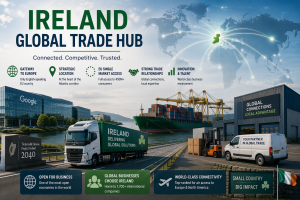
Understanding Strategic Supply Chain Management in the Irish Context Ireland’s position as a global trade hub has never been more complex. To succeed in this environment, you need to understand what is supply chain management in its most sophisticated, integrated form. It isn’t just about the movement of physical goods; it’s a value-creation process designed to synchronise every link in the chain with the company’s broader mission. For professionals aiming for leadership, strategic supply chain management ireland represents the vital shift from being a reactive cost centre to becoming a primary source of competitive advantage.
The difference between tactical logistics and strategic management is stark. Tactical logistics focuses on the “now”, ensuring a shipment arrives at a Dublin warehouse on schedule. This is an operational success.
Strategic supply chain management Ireland examines the wider impact of that shipment, including its carbon footprint, exposure to carbon-related costs, packaging compliance obligations, and alignment with organisational ESG objectives. As Irish businesses face increasing pressure from environmental regulations, supply chain leaders must consider not only efficiency but also long-term resilience, sustainability, and risk management.
This transition is exactly what CMI’s Procurement, Supply & Logistics School prepares you for, helping you achieve the standard for professional excellence whilst providing the framework needed to lead in an open economy.
The Evolution of SCM in Ireland The Irish landscape has transformed from traditional warehousing into a network of sophisticated global hub operations. Major players in the pharmaceutical and tech sectors have driven this change, necessitating a level of digitisation that ensures total transparency across borders.
This digital shift allows you to reduce operational silos, ensuring that procurement, manufacturing, and distribution aren’t just communicating but are working in total synchronisation to mitigate risks.
Why “Strategic” is the Key Word for 2026
In 2026, the focus has moved decisively away from simple cost-cutting. Resilience and agility are the new metrics of success. You can’t rely on transactional supplier relationships when facing trade disruptions or the complexities of the Carbon Border Adjustment Mechanism (CBAM). Instead, you need long-term partnerships built on shared data and ethical transparency. Strategic supply chain management serves as a primary driver of ROI by synchronising end-to-end operations with the overarching commercial goals of the enterprise.
Core Pillars of a Modern Strategic Framework
Building a resilient operation in 2026 requires a framework that treats procurement, manufacturing, and distribution as a single, fluid entity. You can’t manage these functions in isolation if you want to achieve true strategic supply chain management Ireland. This integration ensures that every decision, from sourcing raw materials to final mile delivery, aligns with the organisation’s financial and ethical goals. Addressing strategic supply chain issues in Ireland involves balancing immediate operational needs with the long-term requirements of the national energy transition and global trade shifts.
The “Triple Bottom Line” has evolved from a corporate buzzword into a non-negotiable strategic pillar. In the modern Irish landscape, success is measured by Profit, People, and Planet in equal measure. Whilst profitability remains the engine, your strategy must account for the social impact on your workforce and the environmental footprint of your logistics network. This holistic approach doesn’t just satisfy regulators; it builds the brand equity necessary to attract top-tier talent and loyal customers in a competitive market.
Digital Transformation and Data Analytics
By 2026, Artificial Intelligence has moved beyond experimental pilots to become the backbone of Irish supply chain platforms. You’ll need to master predictive analytics to forecast demand with precision, especially as market volatility continues. Using “Digital Twins” allows you to simulate various scenarios, from port strikes to sudden tariff changes, without risking your actual inventory. This enables supply chain leaders to test contingency plans, assess potential financial impacts, and make more informed decisions before disruptions occur in the real world.
Meanwhile, blockchain technology provides the immutable traceability required for modern compliance and consumer trust. Blockchain essentially creates a secure and transparent record of every transaction and product movement across the supply chain that cannot be altered retrospectively.
Sustainability and Green Logistics
Sustainability is no longer optional. With the EU Packaging and Packaging Waste Regulation (PPWR) implemented, non-compliant packaging is effectively banned from the market. Strategic leaders are now shifting towards circular supply chains that prioritise reuse and recycle to meet strict 2030 targets. Meeting these ESG targets requires a deep dive into your supplier network to ensure ethical sourcing and carbon-neutral logistics. If you’re looking to lead these complex initiatives, exploring an accredited professional diploma can provide the technical expertise you need to bridge the gap between theory and application.
End-to-end visibility is the final piece of the puzzle. You need to see every movement across your global network in real-time to maintain agility. This level of oversight allows you to pivot quickly when disruptions occur, ensuring that your Irish operations remain steady despite external pressures and regulatory changes.
Navigating Ireland-Specific Challenges and Regulations
Ireland’s unique position as a gateway between the European Union and North America presents both immense opportunity and significant regulatory friction. To turn these challenges into a competitive advantage, you must master strategic supply chain management ireland within a framework that accounts for the island’s specific geographic constraints. Successfully navigating these waters means looking beyond simple transport costs to understand the total cost of ownership.
Today’s supply chain leaders operate in an increasingly complex environment shaped by uncertainty, digital disruption, sustainability mandates, trade realignment, and growing regulatory oversight. Today’s professionals must navigate a polycrisis environment. A Polycrisis environment being a situation in which multiple interconnected crises occur simultaneously, with each crisis amplifying the effects of the others. These supply chain crises are seen in global conflicts, climate-related disruptions, AI-driven transformation, and EU sustainability regulations.
Port capacity remains a critical strategic consideration for any Irish enterprise. With Dublin and Rosslare handling the lion’s share of direct-to-EU traffic, congestion can lead to unpredictable delays that ripple through your entire operation. Diversifying your entry points and investing in real-time tracking allows you to pivot when one corridor becomes blocked, ensuring your operations remain agile despite infrastructure limitations. The €71 per tonne carbon tax forms part of Ireland’s long-term climate strategy, with annual increases legislated under the Finance Act 2020 to drive lower emissions and accelerate the transition to a more sustainable economy.
Post-Brexit Strategic Adjustments
Managing customs complexities whilst maintaining competitive lead times has become a core competency for Irish managers. The introduction of the €3 customs duty on e-commerce line items from July 1, 2026, on low-value imports entering the EU adds another layer of administrative cost that must be factored into pricing models.
Many organisations are now favouring strategic stockpiling over traditional Just-in-Time models for high-risk components, building a buffer against the ongoing volatility of the UK-Irish trade corridor and the administrative burden of transit declarations. Even though €3 may seem modest, the cumulative effect can be significant for businesses importing thousands of low-value items each year. Companies may experience higher landed costs, reduced margins, or increased selling prices for consumers.
Irish businesses that rely heavily on suppliers in China and other non-EU countries may begin evaluating alternative sourcing options within Ireland, the UK, or the wider EU to reduce customs-related costs and administrative complexity. For strategic supply chain management ireland, the new duty demonstrates how regulatory changes can directly affect sourcing decisions, total cost of ownership, inventory planning and supplier selection.
Developing Critical Skills for Supply Chain Leadership To command a Senior Director salary of €120,000 or more in the 2026 jobs market, you must evolve beyond technical proficiency. Mastering strategic supply chain management ireland now requires a sophisticated blend of data fluency and human-centric leadership.
Whilst entry-level roles (typically earning €38,000 to €48,000) focus on execution and operations, leadership roles demand the ability to translate complex data into actionable business strategy. The most successful professionals in this field have identified five core competencies for the current era:
Data Fluency: The ability to interpret AI-driven analytics to predict market shifts.
Strategic Sourcing: Moving beyond price to total value and ethical compliance.
Risk Mitigation: Building resilient frameworks that withstand global volatility.
Sustainability Leadership: Navigating the complexities of ESG and circular economy targets.
Emotional Intelligence (EQ): Managing diverse stakeholder interests across the entire value chain.
The shift from technical oversight to emotional intelligence is perhaps the most significant change for 2026. You aren’t just managing inventory; you’re managing relationships and leading cross-functional teams.
Effective negotiation now requires an understanding of your partner’s long-term goals rather than just securing a short-term discount. Bridge your leadership gap by enrolling in a Professional Diploma in Logistics designed specifically for the modern Irish professional.
Leadership and Change Management
Leading a team through sudden pivots, such as a shift in trade corridors or new customs regulations, requires a culture of continuous improvement. Implementing Kaizen principles allows your organisation to make incremental, sustainable gains that improve overall agility.
Strategic negotiation techniques have also evolved. For Irish procurement managers, this means balancing the need for local resilience with the cost-efficiencies of global sourcing, all whilst maintaining a steady hand during periods of high-pressure disruption.
Risk Management and Resilience Planning
Identifying “Black Swan” events is no longer a theoretical exercise; it’s a daily requirement. You must build enough buffer capacity to protect the business without bloating the balance sheet with excess inventory.
A supply chain Black Swan event is a rare, unexpected, and highly disruptive event that has a severe impact on supply chains but is difficult or impossible to predict using normal forecasting methods.
Developing financial acumen is vital, as it allows you to demonstrate how SCM decisions directly impact working capital and the organisation’s bottom line. For SMEs across Ireland, robust business continuity plans are the difference between surviving a disruption and losing market share to more agile competitors. Success in this area requires a deep understanding of how risk impacts every department, from finance to customer service.
Advancing Your Career with CMI Ireland
Securing a senior leadership role in the Irish market requires more than just a couple of years of service. It demands a recognised qualification that proves you can handle the complexities of strategic supply chain management Ireland.
CMI’s School of Procurement, Supply & Logistics provides this essential bridge between your current experience and your future career goals. Unlike short, one-day seminars that only scratch the surface, CMI’s professional diplomas offer the depth needed to lead multi-million-euro operations and navigate the regulatory shifts of 2026.
Choosing the right educational partner is a critical decision for your career trajectory. You need a programme that respects your time whilst delivering the high-level insights required for organisational resilience. CMI has established itself as a prestigious gateway for professionals who want to transition into higher tiers of management, offering a support system that understands the unique pressures of the Irish industrial landscape.
Why Professionals Choose CMI
Employers across Ireland respect CMI qualifications because they’re built on a foundation of industry excellence and industry aligned partners. They focus on practical application, ensuring you can take what you learn in the online classroom and apply it directly to your workplace the next morning. You’ll move beyond academic theory to master real-world challenges, such as implementing circular economy targets or managing the financial impact of the €71 per tonne carbon tax. This results-oriented approach creates a supportive learning environment where your knowledge and application advancement is the primary metric of success.
Mastering the Future of Irish Logistics
Mastering the complexities of 2026 requires a decisive shift from reactive logistics to proactive, value-driven leadership. You’ve seen how digital transformation, strict sustainability regulations, and the unique trade corridors of the Irish market demand a more sophisticated approach.
By prioritising strategic supply chain management ireland, you don’t just protect your organisation from volatility; you create the high-level competitive advantage that defines modern success.
Advancing to a senior leadership role requires a blend of technical expertise and accredited professional recognition. CMI diplomas are designed specifically for working professionals, providing the practical framework you need to bridge the gap between academic theory and workplace application through expert-led tuition. Explore their range of Professional Diplomas in Procurement & Supply Chain to begin your transformation today. Your journey toward the next tier of your career is a steady path, and with the right support, your professional growth is certain.
Enrolment and Course Delivery
Flexibility is at the heart of CMI’s delivery model. They offer online and distance learning options that allow you to balance your studies with a demanding full-time role, no matter where you’re based in the country. You’ll gain access to expert tutors who aren’t just academics; they’re seasoned industry leaders based in Ireland who offer real-world experience in Irish and global supply chains. This steady guidance ensures you stay forward-thinking and innovative as you work toward your diploma.
The path to a strategic promotion starts with a single, decisive step. By joining a community of like-minded professionals, you’ll build the network and the knowledge base necessary to command senior director salaries. Don’t let your career plateau due to a lack of formal strategic qualifications. Apply today to secure your place in the next intake.
Disclaimer: This article is intended for educational purposes and reflects industry knowledge and best practice available at the time of writing. CMI Ireland encourages readers to consult relevant professional bodies and regulatory sources for the most up-to-date guidance and requirements within their sector.
What is the difference between logistics and strategic supply chain management?
Logistics focuses on the tactical movement and storage of goods, whereas strategic supply chain management ireland involves the end-to-end integration of procurement, operations, and distribution to create a sustainable competitive advantage. It moves beyond simple transport to align every link in the chain with the organisation’s long-term commercial goals and ROI
Are supply chain management courses in Ireland recognised internationally?
Yes, the professional diplomas offered through CMI are accredited by leading industry bodies, ensuring your qualification is respected both in Ireland and globally. These certifications are designed to meet international standards, making them a valuable asset if you decide to pursue opportunities in multinational pharmaceutical or tech firms abroad.
How much time per week is required for a professional diploma in logistics?
You should expect to dedicate approximately six to eight hours per week to your studies, which includes online lectures and independent research. Participation in a live online class of 3 hours one evening per week is typical. This structure is specifically designed for busy professionals who need to balance their personal development with a full-time career without sacrificing the quality of their learning experience
Can I study strategic supply chain management online whilst working full-time?
You can absolutely study online whilst working full-time, as CMI’s flexible learning models are built specifically for the modern professional. Our digital environment allows you to access course materials and expert-led tuition at a time that suits your schedule, ensuring you can apply new strategic frameworks to your workplace immediately. Classes are recorded for playback if you miss them.
What are the entry requirements for a professional diploma at CMI Ireland?
Entry requirements typically focus on your professional experience in a relevant field or prior educational qualifications. Admissions who are easily contactable assess each applicant’s professional background to ensure they are suited to the appropriate level of procurement and supply chain qualification, providing a clear pathway for ambitious professionals seeking to progress into senior management and leadership roles.
What career roles can I expect after completing a strategic SCM supply chain management course in Ireland?
Completing a course in strategic supply chain management ireland prepares you for high-level roles such as Supply Chain Director, Senior Procurement Manager, or Global Operations Lead. These positions often command significant salaries, with senior director roles in Ireland’s thriving pharmaceutical and medical device sectors reaching €100,000 or more in 2026.
Does the course cover Irish-specific regulations, sustainability requirements and post-Brexit challenges?
Absolutely. The curriculum is designed with the realities of the modern Irish and European supply chain environment in mind, covering not only traditional procurement and logistics principles but also the latest regulatory, sustainability, and trade developments affecting organisations in 2026. You’ll examine key topics including Irish and EU regulatory compliance, post-Brexit trading arrangements, supply chain resilience, the Carbon Border Adjustment Mechanism (CBAM), ESG and sustainability reporting requirements, and the growing impact of carbon taxation on business operations. The programme also explores the EU’s new €3 customs duty on low-value e-commerce imports, packaging compliance requirements, customs processes, and strategic approaches to managing increasingly complex international supply networks. Through practical case studies and industry-focused learning, you’ll develop the skills needed to navigate today’s evolving supply chain landscape, helping organisations reduce risk, maintain compliance, improve sustainability performance, and build resilience in an increasingly complex global trading environment.
Is there support for professionals returning to education after a long break?
CMI provide a supportive learning environment with access to expert tutors who function as mentors for those returning to education. If it’s been several years since you last studied, their methodical teaching cadence ensures you build confidence whilst mastering the latest industry-aligned methodologies at a steady pace.
We use cookies on our website to give you the most relevant experience by remembering your preferences and repeat visits. By clicking “Accept All”, you consent to the use of ALL the cookies. However, you may visit "Cookie Settings" to provide a controlled consent.
This website uses cookies to improve your experience while you navigate through the website. Out of these, the cookies that are categorized as necessary are stored on your browser as they are essential for the working of basic functionalities of the website. We also use third-party cookies that help us analyze and understand how you use this website. These cookies will be stored in your browser only with your consent. You also have the option to opt-out of these cookies. But opting out of some of these cookies may affect your browsing experience.
Necessary cookies are absolutely essential for the website to function properly. These cookies ensure basic functionalities and security features of the website, anonymously.
Cookie
Duration
Description
cookielawinfo-checkbox-analytics
11 months
This cookie is set by GDPR Cookie Consent plugin. The cookie is used to store the user consent for the cookies in the category "Analytics".
cookielawinfo-checkbox-functional
11 months
The cookie is set by GDPR cookie consent to record the user consent for the cookies in the category "Functional".
cookielawinfo-checkbox-necessary
11 months
This cookie is set by GDPR Cookie Consent plugin. The cookies is used to store the user consent for the cookies in the category "Necessary".
cookielawinfo-checkbox-others
11 months
This cookie is set by GDPR Cookie Consent plugin. The cookie is used to store the user consent for the cookies in the category "Other.
cookielawinfo-checkbox-performance
11 months
This cookie is set by GDPR Cookie Consent plugin. The cookie is used to store the user consent for the cookies in the category "Performance".
viewed_cookie_policy
11 months
The cookie is set by the GDPR Cookie Consent plugin and is used to store whether or not user has consented to the use of cookies. It does not store any personal data.
Functional cookies help to perform certain functionalities like sharing the content of the website on social media platforms, collect feedbacks, and other third-party features.
Performance cookies are used to understand and analyze the key performance indexes of the website which helps in delivering a better user experience for the visitors.
Analytical cookies are used to understand how visitors interact with the website. These cookies help provide information on metrics the number of visitors, bounce rate, traffic source, etc.
Advertisement cookies are used to provide visitors with relevant ads and marketing campaigns. These cookies track visitors across websites and collect information to provide customized ads.

 New regulatory and sustainability challenges are shaping the supply chain management profession, from the Carbon Border Adjustment Mechanism (CBAM) and growing ESG reporting requirements to the imminent EU Packaging and Packaging Waste Regulation (PPWR) deadline of 12th August.
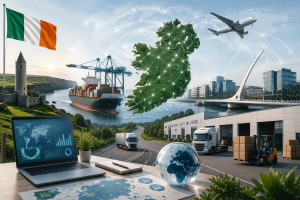 Ireland’s position as a global trade hub has never been more complex. To succeed in this environment, you need to understand
 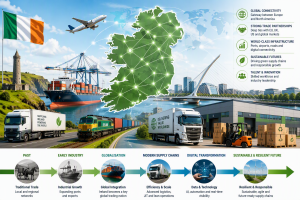 The Irish landscape has transformed from traditional warehousing into a network of sophisticated global hub operations. Major players in the pharmaceutical and tech sectors have driven this change, necessitating a level of digitisation that ensures total transparency across borders.
 Ireland’s unique position as a gateway between the European Union and North America presents both immense opportunity and significant regulatory friction. To turn these challenges into a competitive advantage, you must master strategic supply chain management ireland within a framework that accounts for the island’s specific geographic constraints. Successfully navigating these waters means looking beyond simple transport costs to understand the total cost of ownership.
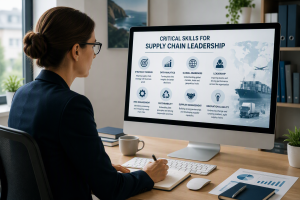 To command a Senior Director salary of €120,000 or more in the 2026 jobs market, you must evolve beyond technical proficiency. Mastering strategic supply chain management ireland now requires a sophisticated blend of data fluency and human-centric leadership.
 Securing a senior leadership role in the Irish market requires more than just a couple of years of service. It demands a recognised qualification that proves you can handle the complexities of strategic supply chain management Ireland.
 Mastering the complexities of 2026 requires a decisive shift from reactive logistics to proactive, value-driven leadership. You’ve seen how digital transformation, strict sustainability regulations, and the unique trade corridors of the Irish market demand a more sophisticated approach.


