Essential Supply Chain Management Skills for CV success in 2026
What are recruiters and hiring managers really looking for when they review a supply chain CV, and how can you ensure yours rises above hundreds of competing applications?
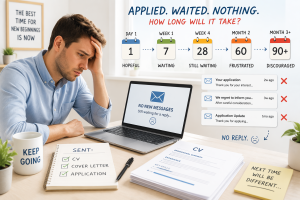
Have you ever applied for a job that seemed perfect for your skills and experience, only to hear absolutely nothing back?
No acknowledgement. No feedback. No interview invitation.
Perhaps you’ve learned to hide the disappointment. You tell yourself not to take it personally and move straight on to the next application. After all, job hunting can feel like a numbers game—one application after another, hoping that eventually something sticks.
But what if the problem isn’t you?
In a market where 73% of supply chain leaders are hitting a “tariff absorption wall”, hiring managers aren’t just looking for someone to manage logistics; they’re searching for strategic architects who can protect the bottom line. What if your CV is being rejected before a recruiter even has the chance to read it?
The uncomfortable reality is that most applications never reach human eyes. Instead, they are filtered through Applicant Tracking Systems (ATS) and recruitment algorithms designed to identify candidates who appear to be the closest match for the role. In many cases, the difference between being invited for an interview and being quietly rejected comes down to how effectively your CV communicates the right qualifications, skills, experience, and achievements.
Supply Chain Management Skills for CV Success is a practical guide that helps professionals identify, develop, and showcase the technical and soft skills employers value most, increasing their chances of passing ATS screening systems and securing job interviews.
This guide bridges that gap by providing a framework for quantifying your achievements and a list of high-impact keywords to bypass automated filters when search for a job in supply chain management. We’ll also provide a clear breakdown of which accredited qualifications will elevate your career trajectory in Ireland, ensuring your experience carries the professional weight it deserves.
Mastering the right supply chain management skills for CV success in 2026 is no longer about simply listing tasks but about demonstrating your ability to navigate these complex global pressures with precision. It’s frustrating when your CV feels like a list of daily chores rather than a showcase of your technical expertise and strategic value.
For supply chain professionals, the challenge is even greater. Employers are searching for candidates who can demonstrate a combination of recognised qualifications, relevant industry experience, and practical supply chain management skills. While qualifications help establish credibility, skills gained through procurement, logistics, planning, inventory management, supplier relationships, and operational improvement often carry even greater weight.
Key Takeaways
Distinguish your profile by balancing technical hard skills with the critical soft behaviours needed to lead cross-functional teams.
Identify and integrate the most relevant supply chain management skills for CV success to ensure your application passes through Applicant Tracking Systems (ATS) and captures the attention of hiring managers.
Discover how industry-recognised accredited diplomas from CMI Ireland can validate your practical experience and provide the professional authority required to secure high-level roles.
Table of Contents
The Evolving Landscape of Supply Chain Management Skills in 2026
Hard vs Soft Skills: Categorising Your Supply Chain Expertise
Quantifying Your Impact: Moving Beyond Task Descriptions
Optimising Your CV for ATS and Hiring Managers
Elevating Your CV with Accredited Qualifications
The Evolving Landscape of Supply Chain Management Skills in 2026
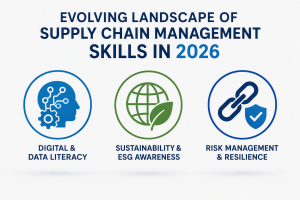
Supply chain management skills for CV success in 2026 are no longer just about moving goods between different locations. They represent a sophisticated blend of technological fluency, strategic foresight, and ethical responsibility. For a comprehensive overview of supply chain management and its historical foundations, it’s clear the industry has transitioned from a back-office support function to a boardroom priority. Recruiters now look for architects who can design systems, not just operators who follow them.
Companies in 2026 value your ability to pivot during geopolitical shifts or trade disruptions. Supply chain resilience is the ability to anticipate and navigate global disruptions before they impact the final customer. Demonstrating this proactive mindset on your profile is what separates a mid-level candidate from a future leader.
The Impact of Digitisation on Your CV
You can’t ignore the digital tide. Showing familiarity with SCM software like SAP S/4HANA Cloud 2608 or AI-driven forecasting tools is now a mandatory requirement. It’s not about being an IT specialist; it’s about demonstrating how you use these tools to drive efficiency. When listing these essential Supply Chain Management Skills for CV success, focus on the outcomes they enabled. For example, instead of just naming a platform, highlight how you leveraged AI forecasting to reduce inventory overhead. This approach proves you understand the technology’s strategic purpose rather than just its interface.
Sustainability and ESG in Modern Procurement
Sustainable sourcing has become a top-tier skill as Irish employers face stricter environmental regulations. Understanding circular economy principles, where waste is designed out of the system, adds immense value to your profile. Top Irish firms are actively seeking professionals who can manage Environmental, Social, and Governance (ESG) criteria within their supplier networks. Identifying “green” skills on your CV shows you’re prepared for the 85% of corporations planning to increase their sustainability investments by the end of 2026. Demonstrating that you can balance profit with planetary impact marks you as a forward-thinking leader ready for the challenges of a modern economy.
Hard vs Soft Skills: Categorising Your Supply Chain Expertise
A high-impact CV is more than a list of previous jobs; it’s a balanced portfolio of your professional capabilities. To capture the attention of modern recruiters, you must present a clear distinction between your technical hard skills and your interpersonal soft behaviours. Including a mix of essential hard and soft skills demonstrates that you possess both the functional knowledge to execute tasks and the leadership qualities to drive organisational change.
In 2026, strategic sourcing and contract management have emerged as the heavy hitters for senior roles. As global markets become increasingly volatile, companies prioritising resilience need experts who can manage complex supplier ecosystems rather than just transactional buying. Highlighting these specific supply chain management skills for CV success signals that you can protect a business from external shocks whilst maintaining a competitive edge.
Technical Supply Chain Proficiencies
Technical skills are the quantifiable abilities you have developed through hands-on experience and formal training. These are the “tools of the trade” that allow you to manage the physical and digital flow of goods. When detailing essential Supply Chain Management Skills for CV success add sections, on these core areas:
Inventory management and demand planning: Show how you optimise stock levels to reduce waste and improve cash flow.
Procurement and strategic sourcing: Highlight your ability to select vendors based on value, resilience, and sustainability rather than just price.
Logistics and distribution: Prove your mastery of the physical movement of goods across complex international networks.
Soft Skills That Drive Supply Chain Success
Technical expertise might get you the interview, but soft skills are what secure the job offer. These behaviours are essential for navigating the human element of the industry. The most effective Supply Chain Management Skills for CV success features these key traits:
Negotiation and relationship management: Your capacity to build long-term trust with suppliers is a direct driver of performance.
Analytical thinking: Demonstrate your ability to interpret complex data sets to make informed, strategic business decisions.
Project management: Show that you can lead cross-functional teams to implement meaningful improvements.
Balancing these categories proves you are a versatile professional ready for the boardroom. If you want to formalise your expertise, consider how an accredited diploma in procurement and supply can provide the industry-recognised validation that Irish employers value.
Quantifying Your Impact: Moving Beyond Task Descriptions
Recruiters spend an average of six seconds scanning a profile before deciding its fate. To survive this initial cull, your supply chain management skills for CV success must be framed around tangible impact rather than passive duties. Stating that you “managed a team” tells a hiring manager very little about your actual capability. In contrast, explaining that you “led a team of five to reduce lead times by 15%” provides an immediate, measurable proof of your value. This shift from description to quantification is the most effective way to demonstrate that you’re a results-oriented professional. The Action-Result-Benefit (ARB) framework is your most powerful tool for this transition. By using this structure, you lead with the positive outcome, making it impossible for a recruiter to miss your contribution. Adopting “benefit-first” language ensures that the most impressive part of your achievement hits the reader in the first three seconds of their scan. It’s a strategy that transforms your profile from a list of responsibilities into a record of proven success.
Using Data to Prove Your Worth
Precision is essential when you’re trying to make your skills tangible. Use percentages, Euro values, and specific timeframes to ground your claims in reality. If you’ve worked in procurement, don’t just say you saved money; specify that you “secured €620,000 in annual cost avoidance by diversifying the supplier base.” In a logistics or warehouse environment, efficiency gains are your primary currency. You might state that you “optimised warehouse layout to increase picking accuracy by 20% over a six-month period.” These numbers provide the concrete evidence that Irish employers need to trust your expertise.
The Language of Achievement
The verbs you choose dictate the energy of your CV. Replace tired phrases like “responsible for” with powerful, active verbs such as “orchestrated”, “negotiated”, “implemented”, or “transformed”. These words suggest a proactive professional who takes ownership of their environment. When describing your workplace, use sophisticated terminology that reflects your high level of register. For instance, referring to your department as a “centre of excellence” signals a commitment to global standards and continuous improvement.
Turning a boring duty into a compelling achievement is a matter of perspective. Instead of writing “handled supplier issues,” try “negotiated with three underperforming vendors to restore 99% on-time delivery rates.” This approach proves you don’t just perform a role; you improve it. By consistently applying these supply chain management skills for CV writing, you position yourself as a high-value asset capable of navigating the complexities of the 2026 market.
Optimising Your CV for ATS and Hiring Managers
Before a human eye even sees your application, a digital gatekeeper—the Applicant Tracking System (ATS)—decides if you’re a match. These systems scan for specific supply chain management skills for CV relevance, matching your text against the job description to calculate a compatibility score. If your profile lacks the precise terminology the recruiter has programmed, your extensive experience might never be reviewed. Tailoring your CV isn’t just a suggestion; it’s a technical requirement for modern job seekers in Ireland’s competitive logistics sector.
Your professional summary serves as the “hook” that sets the tone for the entire document. It’s the ideal space to establish immediate authority by using industry-recognised acronyms like KPI, IoSCM and CIPS. A well-crafted summary doesn’t just list what you do; it defines your professional identity. Instead of a generic opening, lead with a benefit-oriented statement that highlights your status as a strategic leader who delivers measurable results across the end-to-end supply chain.
There is another factor that separates average applications from exceptional ones: evidence of impact. Recruiters want proof that you can deliver results. Did you reduce costs? Improve supplier performance? Increase service levels? Streamline inventory? Shorten lead times? Your achievements tell a story that job titles alone cannot.
Many HR managers and recruiters, whether working in-house or for recruitment agencies, face the daunting task of reviewing hundreds of applications for a single position. Time is limited. Attention spans are short. As a result, they immediately look for evidence that a candidate possesses the right blend of qualifications, skills, and experience.
Out of hundreds of CVs, the one that clearly demonstrates relevant supply chain expertise, uses industry-recognised terminology, and highlights measurable achievements is far more likely to progress to the interview stage.
Adding to the challenge, automated screening tools often rank or exclude candidates based on keywords and competency matches. Miss the keywords an employer is searching for, and your application may never make it to the recruiter’s shortlist.
So what should you prioritise—technical skills or soft skills?
Where to Place Your Skills
Strategic placement of your expertise is just as important as the skills themselves. Whilst you should integrate your achievements into your work history, a dedicated “Core Competencies” block provides maximum visibility for both the Applicant Tracking System ‘ATS’ and the hiring manager. This section should be a clean, bulleted list located near the top of the first page. Avoid complex graphics, tables, or unusual fonts that can break the ATS scan. A professional, minimalist layout ensures your document remains readable and keeps the focus on your qualifications.
Keyword Checklist for 2026
To ensure your profile reaches the top of the pile, you must speak the language of the 2026 market. Natural keyword integration is vital; you want to avoid “keyword stuffing,” which feels forced and unprofessional. Instead, weave these terms into your achievement statements. Focus on these essential keywords:
Strategic Sourcing and Risk Mitigation
Supplier Diversity and ESG Compliance
Demand Planning and AI Forecasting
Circular Economy and Sustainable Procurement
Lean Six Sigma and Just-in-Time (JIT)
Vendor Management and Procurement Analytics
Digital Transformation and ERP Systems
Using the term “Accredited Professional” is a particularly powerful keyword for mid-to-senior roles, as it signals a commitment to global standards. It proves you have moved beyond academic theory to achieve a level of industry-recognised excellence. If you’re ready to validate your expertise with a credential that Irish employers trust, consider the accredited diplomas in procurement and supply offered by CMI Ireland. Doing one of these diploma’s will elevate your professional standing.
Did you know that holding two or more supply chain qualifications can increase your median salary by as much as 27%?
The ROI of a Supply Chain Diploma
Experience provides the foundation for any successful career, but in a competitive tight employment market, professional validation often acts as the deciding factor for high-level roles. Employers aren’t just looking for a list of duties; they crave the “proven success” signal that only industry-recognised accreditation can provide. By formalising your expertise, you transform your supply chain management skills for CV sections from personal claims into verified professional assets. Improving your knowledge and credentials with one or more accreditated diploma supply chain qualifications will elevate your CV to more successful outcomes.
The School of Procurement & Supply at CMI helps ambitious professionals across the country do just that, offering key industry diploma courses in supply chain. CMI acts as a motivating career partner, providing a structured and reliable path for those navigating the complexities of modern logistics. A professional diploma bridges the gap between daily operations and strategic leadership, giving you the vocabulary and framework needed to implement global best practices immediately. It signals to recruiters that you’re not just a practitioner, but a specialist committed to the highest professional standards.
Securing a formal qualification yields a measurable return on investment for your career trajectory. Data from the Association for Supply Chain Management in 2026 indicates that holding a supply chain certification can increase a professional’s median salary by 18%, whilst holding two or more certifications can drive that increase to 27%. In Ireland’s logistics hubs, where precision and compliance are paramount, a diploma qualification provides the credibility required for rapid promotion. CMI courses are designed specifically for the schedules of working professionals, ensuring you can advance your education without imposing on your work time.
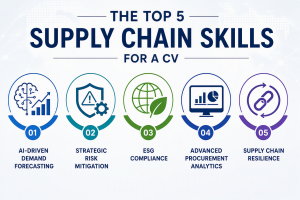
What are the top 5 supply chain skills for a CV in 2026?
Artificial intelligence and machine learning are increasingly transforming demand forecasting by enabling organisations to analyse historical performance, market trends, and real-time data more effectively, resulting in improved forecast accuracy, enhanced inventory management, and better operational decision-making.
Strategic risk mitigation has become a critical supply chain competency, requiring professionals to identify, assess, and proactively manage potential disruptions such as geopolitical instability, supplier failures, cyber threats, and regulatory changes to protect business continuity and organisational performance.
ESG compliance is now an important consideration within modern supply chains, as organisations seek to align procurement and operational activities with environmental, social, and governance standards through sustainable sourcing practices, ethical labour policies, and greater transparency across supplier networks.
Advanced procurement analytics enables supply chain professionals to leverage data-driven insights to evaluate supplier performance, monitor spending patterns, identify cost-saving opportunities, and support informed strategic purchasing decisions that deliver long-term value.
Supply chain resilience refers to the capacity of an organisation to anticipate, adapt to, and recover from disruptions quickly and effectively, ensuring operational continuity and maintaining customer service levels in an increasingly complex and unpredictable global business environment.
Choosing the Right Path with CMI Ireland
Selecting a programme that aligns with global industry standards is essential for long-term success. CMI offers a comprehensive range of diplomas through its School of Procurement, Supply & Logistics, focusing on the real-world application of supply chain principles. These offerings are meticulously aligned with the needs of Irish employers, covering everything from sustainable procurement to advanced risk mitigation. Explore our Procurement and Supply Chain courses to find the right path for your advancement and ensure your supply chain management skills for CV success are backed by a prestigious, industry-recognised credential.
Take Command of Your Supply Chain Career Path
Mastering the 2026 market requires more than just operational experience; it demands a strategic mindset backed by technical fluency. You’ve learned how to balance hard and soft proficiencies whilst using the ARB, Action – Result – Benefit framework to prove your worth to recruiters. Optimising your profile for digital gatekeepers ensures your expertise doesn’t go unnoticed in a sea of applicants. Refining your supply chain management skills for CV success is the first step toward securing high-level roles in Ireland’s leading sectors. As Ireland’s leading institute for industry-recognised diplomas, CMI offers flexible part-time learning designed specifically for busy professionals. Their programmes are accredited by leading professional bodies such as CIPSandIoSCM, ensuring your credentials carry the weight needed to influence boardroom decisions and accelerate your salary growth. Bridging the gap between your current experience and your future potential has never been more accessible.
Your professional advancement is a journey, and the right qualification is the catalyst for continuous improvement. Take the next step with confidence and secure the career trajectory you deserve. Contact CMI admissions today to find out more.
Disclaimer: This article is intended for educational purposes and reflects industry knowledge and best practice available at the time of writing. CMI Ireland encourages readers to consult relevant professional bodies and regulatory sources for the most up-to-date guidance and requirements within their sector.
What are the top 5 supply chain skills for a CV in 2026?
The top 5 supply chain management skills for CV success in 2026 are AI-driven demand forecasting, strategic risk mitigation, ESG compliance, advanced procurement analytics, and supply chain resilience. These skills reflect the industry’s transition toward data-driven decision-making and ethical sourcing. Highlighting these on your profile proves you can navigate modern complexities whilst protecting the company’s bottom line. Recruiters prioritise candidates who demonstrate a proactive approach to global disruptions rather than just operational logistics.
How do I list supply chain qualifications or certifications on my CV?
List your certifications in a dedicated “Professional Development” section or within a “Qualifications” block near the top of your document. Use both the full name of the qualification and its industry-recognised acronym, such as CIPS or SCM, to ensure visibility for both ATS and hiring managers. This dual approach ensures your profile captures the attention of non-technical HR staff and experienced supply chain leaders alike.
Can I get a supply chain job without a degree if I have an accredited diploma?
Yes, you can secure high-level roles without a traditional degree if you possess an accredited professional diploma. Many Irish employers prioritise industry-aligned certifications because they provide a “proven success” signal that generic academic theory often lacks. A professional diploma from a reputable school demonstrates that you have the practical workplace application and technical expertise required to lead complex operations in the real world.
What is the difference between logistics and supply chain management on a CV?
Logistics typically refers to the physical movement and storage of goods, whereas supply chain management encompasses the entire end-to-end strategic process. On a CV, logistics focuses on distribution and warehouse efficiency. Supply chain management is a broader term that includes procurement, vendor management, and risk mitigation. Using the correct terminology helps define your level of authority and the scope of your previous responsibilities.
How do I quantify my procurement achievements if I don’t have access to all the data?
You can still quantify your impact by focusing on percentage improvements, timeframes, or frequency if exact currency values are unavailable. For example, mention that you “reduced supplier lead times by 10%” or “standardised procurement processes for three separate departments.” These metrics provide concrete evidence of your ability to improve efficiency and add value, even without access to high-level financial data or sensitive company records.
Are online supply chain courses recognised by Irish employers?
Online supply chain courses are highly regarded by Irish employers, provided they are accredited by recognised professional bodies. CMI partners with gold standard bodies such as CIPS and IoSCM and CMI itself has in excess of 20 years 5 star reputation with recruiters. The focus in the 2026 job market is on the quality of the curriculum and the practical skills gained rather than the physical location of the classroom. Flexible learning models are often preferred by working professionals as they demonstrate a commitment to continuous development whilst maintaining a full-time career.
What soft skills are most important for supply chain managers?
Negotiation, analytical thinking, and relationship management are the most critical soft skills for modern managers. You must be able to lead cross-functional teams and manage complex stakeholder expectations across global networks. These interpersonal behaviours allow you to translate technical data into actionable business strategies. Highlighting these traits alongside your supply chain management skills for CV impact proves you are a versatile leader ready for the boardroom.
How should I handle a career change into supply chain on my CV?
Focus on your transferable skills and use a “Core Competencies” section to highlight relevant expertise like project management or data analysis. Frame your previous experience in a way that relates to supply chain challenges, such as process optimisation or vendor relations. This approach allows you to demonstrate your potential value to a hiring manager before they review your chronological work history, making the transition feel logical and professional.
We use cookies on our website to give you the most relevant experience by remembering your preferences and repeat visits. By clicking “Accept All”, you consent to the use of ALL the cookies. However, you may visit "Cookie Settings" to provide a controlled consent.
This website uses cookies to improve your experience while you navigate through the website. Out of these, the cookies that are categorized as necessary are stored on your browser as they are essential for the working of basic functionalities of the website. We also use third-party cookies that help us analyze and understand how you use this website. These cookies will be stored in your browser only with your consent. You also have the option to opt-out of these cookies. But opting out of some of these cookies may affect your browsing experience.
Necessary cookies are absolutely essential for the website to function properly. These cookies ensure basic functionalities and security features of the website, anonymously.
Cookie
Duration
Description
cookielawinfo-checkbox-analytics
11 months
This cookie is set by GDPR Cookie Consent plugin. The cookie is used to store the user consent for the cookies in the category "Analytics".
cookielawinfo-checkbox-functional
11 months
The cookie is set by GDPR cookie consent to record the user consent for the cookies in the category "Functional".
cookielawinfo-checkbox-necessary
11 months
This cookie is set by GDPR Cookie Consent plugin. The cookies is used to store the user consent for the cookies in the category "Necessary".
cookielawinfo-checkbox-others
11 months
This cookie is set by GDPR Cookie Consent plugin. The cookie is used to store the user consent for the cookies in the category "Other.
cookielawinfo-checkbox-performance
11 months
This cookie is set by GDPR Cookie Consent plugin. The cookie is used to store the user consent for the cookies in the category "Performance".
viewed_cookie_policy
11 months
The cookie is set by the GDPR Cookie Consent plugin and is used to store whether or not user has consented to the use of cookies. It does not store any personal data.
Functional cookies help to perform certain functionalities like sharing the content of the website on social media platforms, collect feedbacks, and other third-party features.
Performance cookies are used to understand and analyze the key performance indexes of the website which helps in delivering a better user experience for the visitors.
Analytical cookies are used to understand how visitors interact with the website. These cookies help provide information on metrics the number of visitors, bounce rate, traffic source, etc.
Advertisement cookies are used to provide visitors with relevant ads and marketing campaigns. These cookies track visitors across websites and collect information to provide customized ads.

 Perhaps you’ve learned to hide the disappointment. You tell yourself not to take it personally and move straight on to the next application. After all, job hunting can feel like a numbers game—one application after another, hoping that eventually something sticks.
 Supply chain management skills for CV success in 2026 are no longer just about moving goods between different locations. They represent a sophisticated blend of technological fluency, strategic foresight, and ethical responsibility. For a
  A high-impact CV is more than a list of previous jobs; it’s a balanced portfolio of your professional capabilities. To capture the attention of modern recruiters, you must present a clear distinction between your technical hard skills and your interpersonal soft behaviours. Including a mix of
  Technical expertise might get you the interview, but soft skills are what secure the job offer. These behaviours are essential for navigating the human element of the industry. The most effective Supply Chain Management Skills for CV success features these key traits:
 Precision is essential when you’re trying to make your skills tangible. Use percentages, Euro values, and specific timeframes to ground your claims in reality. If you’ve worked in procurement, don’t just say you saved money; specify that you “secured €620,000 in annual cost avoidance by diversifying the supplier base.” In a logistics or warehouse environment, efficiency gains are your primary currency. You might state that you “optimised warehouse layout to increase picking accuracy by 20% over a six-month period.” These numbers provide the concrete evidence that Irish employers need to trust your expertise.
 To ensure your profile reaches the top of the pile, you must speak the language of the 2026 market. Natural keyword integration is vital; you want to avoid “keyword stuffing,” which feels forced and unprofessional. Instead, weave these terms into your achievement statements. Focus on these essential keywords: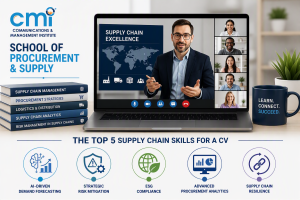
 Artificial intelligence and machine learning are increasingly transforming demand forecasting by enabling organisations to analyse historical performance, market trends, and real-time data more effectively, resulting in improved forecast accuracy, enhanced inventory management, and better operational decision-making.
 Mastering the 2026 market requires more than just operational experience; it demands a strategic mindset backed by technical fluency. You’ve learned how to balance hard and soft proficiencies whilst using the ARB, Action – Result – Benefit framework to prove your worth to recruiters. Optimising your profile for digital gatekeepers ensures your expertise doesn’t go unnoticed in a sea of applicants. Refining your supply chain management skills for CV success is the first step toward securing high-level roles in Ireland’s leading sectors. As Ireland’s leading institute for industry-recognised diplomas, CMI offers flexible part-time learning designed specifically for busy professionals. Their programmes are accredited by leading professional bodies such as


