Facilities Management Courses for Beginners: A Complete Career Guide 2026
Share This Post
Facilities Management Courses for Beginners: A Complete Career Guide 2026
Is your career path defined by the buildings you manage, or the strategic value you bring to them?
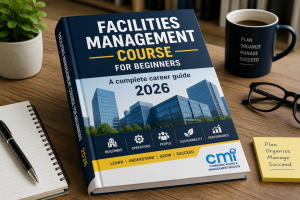
Many people mistake facilities management for a simple maintenance role, but in 2026, it’s a high-stakes leadership discipline that keeps Ireland’s most vital infrastructures running. If you’re looking to transition into this field, finding the right facilities management courses for beginners is the first step toward securing a role that offers both stability and a clear trajectory for professional growth.
You’re likely here because you want to break into the industry but feel overwhelmed by the prospect of years in a classroom or certifications that employers might not even recognise. It’s frustrating to see job postings that demand specific qualifications when you aren’t yet sure about the day-to-day responsibilities of the role. This Facilities Management Courses for Beginners: A Complete Career Guide 2026, provides aspiring facilities professionals with a clear roadmap to develop in-demand skills, understand career pathways, and secure rewarding opportunities in one of Ireland’s fastest-growing professions.
We’ve designed this guide to cut through that noise and show you exactly how accredited professional training can bridge the gap between your current experience and a professional entry-level position.
You’ll discover the core pillars of the industry, learn how to select a programme that respects your current working schedule, and gain a clear roadmap to secure your first position in the Irish market.
Key Takeaways
Understand why modern facilities management has evolved from simple building maintenance into a strategic leadership discipline.
Identify accredited facilities management courses for beginners that provide industry-recognised credentials without the need for a multi-year degree.
Distinguish between general certificates and professional diplomas to ensure your qualification is respected by leading employers in Ireland.
Create a practical roadmap for your career transition by leveraging your existing transferable skills through flexible, practitioner-led training.
Table of Contents
Understanding Facilities Management as a Professional Discipline
Core Competencies Taught in Beginner FM Courses
Evaluating Course Accreditation and Industry Recognition
Planning Your Facilities Management Career Path
Why Choose CMI Communications & Management Institute to do Facilities Management Diploma?
Understanding Facilities Management as a Professional Discipline
Facilities management is far more than a background maintenance function; it is a strategic leadership discipline that integrates people, place, and process to ensure the functionality of the built environment. While the traditional view often focused on reactive repairs, modern What is Facility Management research highlights a shift toward strategic asset management. In this capacity, a facility manager acts as a steward of an organisation’s most expensive physical assets, ensuring they contribute directly to the bottom line rather than just acting as a cost centre.
The role has become central to achieving corporate sustainability and productivity goals. Organisations in Ireland now look to their FM teams to lead the way in energy efficiency, waste reduction, and carbon footprint monitoring. By managing the built environment effectively, you aren’t just keeping the lights on; you’re creating a high-performance setting where employees can thrive and operations can remain resilient against external disruptions.
The Scope of Modern Facilities Management
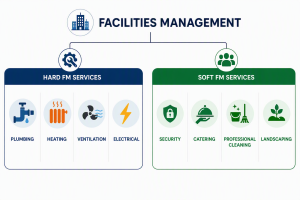
Understanding the breadth of the role is vital for anyone entering the field. The industry typically divides its responsibilities into two distinct categories:
Hard FM services: These involve the physical fabric of the building and its technical systems, including plumbing, heating, ventilation, and electrical infrastructure.
Soft FM services: These focus on the human experience within the building, covering areas like security, catering, professional cleaning, and landscaping.
There is a growing movement toward “Workplace Management,” where the focus shifts from the building itself to the well-being of the people inside. Effective FM now involves curating a workplace experience that supports mental health, ergonomics, and social interaction, which are proven drivers of staff retention and performance.
Understanding Facilities – Built Environments
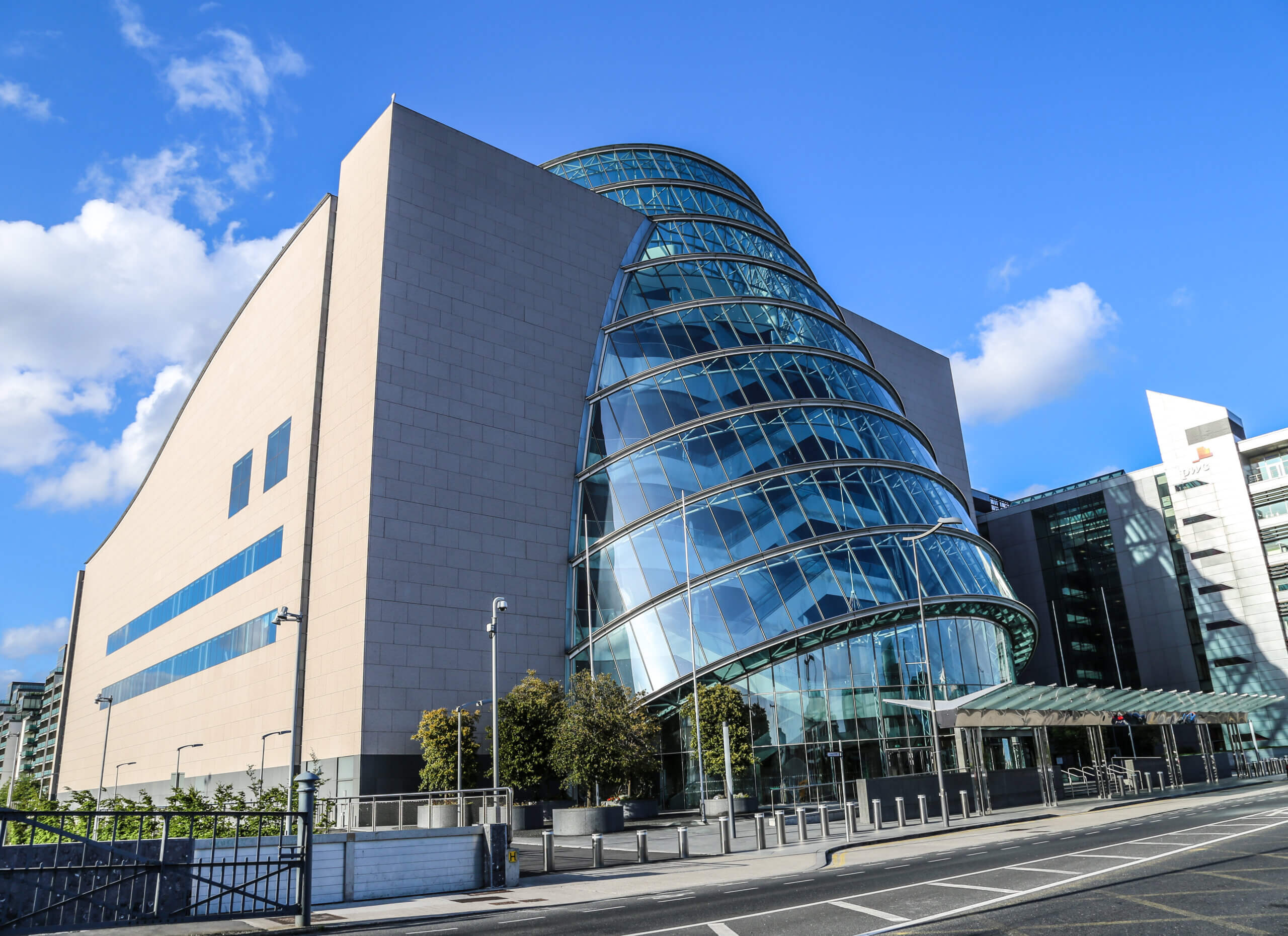
A good example, of modern facilities that is learned on facilities management courses for beginners, is the Convention Centre Dublin in the Docklands. At this venue you can how hard FM services keep the building operational, including the heating, ventilation and air-conditioning (HVAC) systems, electrical infrastructure, lighting controls and plumbing networks that support thousands of visitors. At the same time, soft FM services such as security, cleaning, catering and waste management ensure that every event runs smoothly and provides a positive experience for delegates.
Another great facility is the Three Arena, in Dublin docklands, a large entertainment venue that hosts thousands of visitors. Key hard FM services are the electrical systems, emergency lighting, ventilation, building maintenance and other critical infrastructure required to support major events. Alongside this, soft FM services such as security, cleaning, crowd management and catering play a vital role in delivering a seamless visitor experience. The Three Arena provides an excellent example of how facilities managers combine technical building operations with people-focused services to achieve operational excellence and environmental responsibility. The venue also highlights the growing importance of sustainability in facilities management. Energy-efficient lighting, waste reduction programmes and strong public transport connections help minimise the environmental footprint of large-scale events.
Why Professional Certification is Essential for Beginners
Entering the industry without a structured background can be daunting. If you’re researching facilities management courses for beginners, you’ll quickly find that the discipline relies on a specific professional vocabulary and a complex set of legal compliance standards.
An accredited qualification provides you with the confidence to communicate effectively with contractors, engineers, and facilities teams from day one. Credibility is your most valuable currency when starting a new career path. Employers prioritising high-value contracts or sensitive infrastructures require proof that their managers understand risk assessment and financial oversight. Globally, professional bodies recognise facilities management as a strategic organisational function that integrates people, place, and process within the built environment to improve productivity and quality of life. By securing a recognised diploma, you demonstrate that you meet these global standards and are ready to handle the complexities of a modern facility.
Core Competencies Taught in Beginner FM Courses
Starting a career in this field means moving beyond the “fix-it” mentality. Top-tier facilities management courses for beginners focus on the intersection of operational efficiency and strategic oversight.
It’s not enough to know how a building’s systems work. You must understand the financial implications of every asset’s lifecycle and how to manage the resources that keep a facility running.
Financial management is often the most critical skill for a new manager. You’ll learn to balance operational budgets (OpEx) against capital expenditure (CapEx), ensuring the building remains functional without overspending. This skill links directly to contract management.
Negotiating Service Level Agreements (SLAs) with external vendors is a daily responsibility. You need to ensure that cleaning, security, and maintenance partners deliver high-quality results that align with your organisation’s goals. Space planning has also become a high-priority competency. As Irish businesses adapt to hybrid working, facility managers must master move management. This involves reconfiguring office layouts to maximise productivity while reducing the costs of underutilised space. Effective space management ensures that the physical environment evolves alongside the needs of the workforce.
Health, Safety, and Environmental Responsibilities
In Ireland, the Health and Safety Authority (HSA) enforce strict standards that every facility manager must uphold. Beginners must learn to apply risk assessment methodologies across various building types, from retail centres to industrial warehouses. This isn’t just about compliance; it’s about creating a secure environment for all occupants. Sustainable practices have also moved to the forefront. You’ll learn to implement energy management systems that reduce waste and lower carbon footprints. Insights from facilities managers who manage real venues in Ireland will show how large-scale organisations implement safety and environmental protocols.
Strategic Building Maintenance and Technology
Modern FM relies on moving from reactive maintenance to Planned Preventative Maintenance (PPM). This proactive approach extends the life of building assets and prevents costly emergency repairs. To manage this, you’ll be introduced to Computer-Aided Facilities Management (CAFM) software. These platforms act as a central hub for tracking maintenance schedules and asset performance.
The rise of Smart Buildings and the Internet of Things (IoT) means beginners now use real-time data to monitor occupancy and air quality. If you want to gain a competitive edge in these technical areas, consider reviewing the facilities management courses for beginners at the CMI School of Facilities Management, designed for those entering the industry.
Evaluating Course Accreditation and Industry Recognition
Choosing the right qualification is the most significant decision you’ll make when entering the industry. Not all facilities management courses for beginners carry the same weight in the eyes of a HR manager.
In Ireland, the distinction between a general attendance certificate and a professional diploma from a leading institute can be the difference between securing an interview or having your application overlooked.
Verifying a provider’s reputation involves looking beyond their marketing materials. A respected course provider has have a long-standing history of delivering proven results for its graduates. A common story at CMI, is that 82% of graduates consistently have gained employment in new professions upon completing their diploma qualification. Since 2004, CMI Communications & Management Institute, has deliberately focused its efforts into providing courses of value to Employers, providing professional accreditation that has weight and counts.
You should look for programmes that cover the technical and ethical standards that define the modern facility manager. When a course is industry-aligned, it ensures the curriculum reflects regulatory requirements and technological shifts. CMI has partners with the best industry focused bodies to provide added weight to your qualification.
Accredited Diplomas vs. Short Training Certificates
Depth of study directly influences your career trajectory. While a weekend seminar might introduce basic concepts, it lacks the academic rigour required to manage multi-million-euro budgets or complex building infrastructures. A four-month long diploma offers several advantages:
Comprehensive Curriculum: You gain a holistic understanding of the discipline, from legal compliance to strategic asset management.
Employer Perception: HR departments prioritise candidates with professional diplomas because they represent a proven commitment to professional standards.
Salary Potential: There is a direct link between formal, accredited education and entry into higher salary brackets.
Short certificates often focus on a single niche, such as fire safety or basic maintenance. While useful for continuous professional development, they don’t provide the strategic foundation needed to lead a facilities management department. Investing in a diploma ensures you aren’t just learning a task; you’re mastering a profession.
Global Standards in Facilities Management Education
The FM industry is increasingly globalised. If you plan to work for a multinational corporation or eventually move abroad, your education must be portable.
Aligning your studies with international best practices ensures your skills remain relevant regardless of the territory. CMI Communications & Management Institute focuses on this global perspective, employing industry practitioners who bring real-world, international experience into the digital classroom. This approach bridges the gap between academic theory and the practical demands of the modern workplace, ensuring you graduate with the confidence to manage assets on a global scale.
Planning Your Facilities Management Career Path
Transitioning into a new industry requires more than just enthusiasm; it demands a methodical approach to skill acquisition and networking. Most successful professionals in the Irish market didn’t start with a degree in building services.
Instead, they followed a structured roadmap that turned their existing background into a specialised asset. By following these five steps, you can move from a generalist role into a dedicated management position with confidence.
Step 1: Audit your transferable skills. Many beginners in facilities management come from different backgrounds. Some students have trade experience in maintenance and engineering, electrical work, plumbing and heating systems, construction and building management. Other students bring key skills to succeed in facilities management such as; problem-solving, technical knowledge, health and safety awareness, project management or vendor coordination. These are all valuable FM skills.
Step 2: Bridge the technical gap. Enrolling in facilities management courses for beginners provides the formal framework needed to handle complex building systems, technical requirements, suppliers and financial reporting.
Step 3: Build your professional network. Joining national FM associations such as the IWFM Institute of Workplace facilities Management allows you to connect with mentors and stay informed about the latest regulatory shifts in the Irish market.
Step 4: Target the right entry-level roles. Focus your search on Facilities Coordinator or Assistant positions. These roles offer hands-on experience in day-to-day operations and vendor management.
Step 5: Identify a niche for specialisation. Once you’ve gained a foothold, look toward high-growth areas like sustainability, energy management, or Ireland’s thriving data centre sector.
If you’re ready to take that second step and build a rock-solid technical foundation, you can enrol in an accredited diploma today to accelerate your progress.
Entry-Level Roles and Career Trajectory
Your first role will likely be operational. As a Facilities Assistant or Coordinator, you’ll manage work orders, oversee cleaning schedules, and ensure that health and safety logs are maintained. It’s a busy, varied environment where no two days are the same.
From here, the path is clear. With experience and continued certification, starting with facilities management courses for beginners you can progress to Facilities Manager, then Regional Manager, and eventually to a strategic role as Head of Facilities. As you move up these tiers, your focus shifts from managing tasks to managing strategy and multi-million-euro budgets.
Balancing Professional Studies with Full-Time Work
Making a career change shouldn’t mean pausing your income. Flexible learning models are specifically designed for working professionals who need to study whilst maintaining their current roles. Distance learning allows you to set a pace that fits your schedule, reducing the pressure of traditional classroom environments.
One of the greatest advantages of this approach is the ability to apply what you learn on an evening course to your workplace. Even if you aren’t yet in an FM role, you can begin to view your current approach through the lens of asset management and safety compliance, turning your current job into a practical learning lab.
Why Choose CMI Communications & Management Institute for Your Facilities Management Diploma?
CMI Communications & Management Institute has remained a leader in professional excellence since 2004, providing a steady hand for those looking to advance their careers. When you explore facilities management courses for beginners, you’ll find that CMI’s approach differs from traditional academic institutions.
They prioritise the needs of career-focused individuals who require practical, actionable knowledge that can be deployed immediately in the Irish workplace. By choosing a provider with over two decades of proven success, you’re investing in a reputation that national employers recognise and respect.
Their educational philosophy centre’s on bridging the gap between theory and application. They understand that a textbook definition of a building system is useless if you don’t know how to manage the vendor responsible for it. This is why they focus on practitioner-led instruction, ensuring every module reflects the real-world complexities of the modern built environment. You’ll graduate not just with a certificate, but with the confidence of someone who has been mentored by the best in the business.
Flexible Distance Learning for Working Professionals
Progressing your career shouldn’t require you to put your life on hold. CMI’s flexible learning models allow you to access high-quality course materials from anywhere in Ireland, whether you’re based in a busy city centre or working remotely. This structure is designed specifically for working adults who need to organise their studies around existing professional and personal commitments.
You’ll gain the freedom to progress at a pace that respects your schedule without compromising on the quality of your education.
You’re never alone on this journey. CMI Communications & Management Institute provides a robust support structure that includes direct access to tutors, live online weekly classes, recorded for playback and comprehensive digital resources. This ensures that whilst you’re studying independently, you have the same level of guidance you’d expect from a prestigious physical campus. This balance of autonomy and support is what allows their students to maintain their current roles whilst preparing for their next professional tier.
Industry-Led Curriculum and Expert Tuition
Staying ahead of the curve is vital in an industry that evolves as quickly as FM. CMI curriculum is constantly updated to address the latest trends and challenges facing the sector, from digital transformation to advanced sustainability protocols. On a facilities management course for beginners, you’ll learn from tutors who are active leaders in the FM field in Ireland. You will gain insights that go far beyond standard academic curriculum.
The modern built environment needs skilled professionals who can lead people, manage complex facilities, drive sustainability, and create exceptional workplaces. Your journey towards a rewarding and future-focused career starts with one decisive step. Take that step today and unlock your potential in Facilities Management.
To take the first step toward your new career, consider the Facilities Management Diploma offered at the CMI School of Facilities Management. Discover how this course can transform your professional trajectory.
Your future in the built environment starts today with a single, decisive step forward.
Disclaimer: This article is intended for educational purposes and reflects industry knowledge and best practice available at the time of writing. CMI Ireland encourages readers to consult relevant professional bodies and regulatory sources for the most up-to-date guidance and requirements within their sector.
What qualifications do I need to start a career in facilities management?
You don’t necessarily need a full university degree to enter the field, but most Irish employers prioritising high-value assets require an accredited professional diploma. Doing facilities management courses for beginners provide the technical foundation in health and safety, budgeting, and contract management that general business experience lacks. Securing a recognised qualification ensures you meet the professional standards expected in modern corporate environments.
Can I study facilities management online whilst working full-time?
Yes, you can successfully balance your professional studies with a full-time role through flexible distance learning models. CMI offer live online classes one night a week to help work around your busy schedule. This approach allows you to access course materials and expert tuition at a pace that fits your schedule, ensuring your career progression doesn’t disrupt your current income. Many students find that they can apply their learning to their workplace immediately, which adds instant value to their current role.
What is the difference between building management and facilities management?
Building management typically focuses on the physical maintenance and technical systems of a structure, whereas facilities management is a strategic discipline that integrates people, place, and process. While a building manager ensures the boilers and lifts are functioning, a facility manager focuses on the overall workplace experience, sustainability goals, and the strategic use of space to improve organisational productivity.
Is facilities management a good career choice in 2026?
Facilities management is an excellent career choice in 2026 because of the increasing focus on ESG (Environmental, Social, and Governance) standards and hybrid workplace strategies. The biggest trend in 2026 is the shift towards smart, sustainable and people-focused workplaces. Facilities Managers are now leading initiatives in energy efficiency, carbon reduction, workplace technology, hybrid working environments, and employee wellbeing. This has elevated FM from a support function to a strategic business role. As Irish businesses strive to reach carbon neutrality and optimise their office footprints, the demand for skilled managers who can navigate these complexities is rising. It’s a resilient profession that offers long-term stability and clear pathways to senior leadership roles.
How long does it take to complete a facilities management diploma for beginners?
A professional diploma for beginners typically takes between four to five months to complete, depending on the specific programme and your study pace. This timeframe is designed to provide a deep dive into the core pillars of the industry without the multi-year commitment of a traditional degree. It’s a focused, efficient route that prepares you for entry-level management positions in a relatively short period.
Are CMI Communications & Management Institute courses recognised by employers nationwide?
Yes, CMI Communications & Management Institute Ltd.’s diplomas are highly respected and recognised by employers across the country because of their long-standing commitment to professional standards. Since 2004, they have partnered with industry practitioners and industry bodies . Their courses satisfy the demands and current needs of FM employers in the Irish market. Graduates are seen as career-ready professionals who possess the technical knowledge and strategic mindset required by top-tier FM organisations such as Sodexo, Aramark, Mitie and Apleona.
What kind of salary can a beginner in facilities management expect?
Entry-level salaries for facilities professionals in Ireland vary depending on the sector, location, and the scale of the facility being managed. Whilst we don’t quote specific figures, industry reports suggest that individuals with accredited certifications often start at a higher pay grade than those without formal training. As you progress through higher levels of certification and gain experience, your earning potential increases significantly.
Do I need a technical background in engineering or construction to start FM?
You don’t need a background in engineering or construction to launch a successful career in this field. Whilst technical knowledge is part of the role, facilities management is primarily a leadership and coordination discipline. Transferable skills in project management, administration, and people management are very important and will help your chances of being selected for a wide variety of FM roles.
We use cookies on our website to give you the most relevant experience by remembering your preferences and repeat visits. By clicking “Accept All”, you consent to the use of ALL the cookies. However, you may visit "Cookie Settings" to provide a controlled consent.
This website uses cookies to improve your experience while you navigate through the website. Out of these, the cookies that are categorized as necessary are stored on your browser as they are essential for the working of basic functionalities of the website. We also use third-party cookies that help us analyze and understand how you use this website. These cookies will be stored in your browser only with your consent. You also have the option to opt-out of these cookies. But opting out of some of these cookies may affect your browsing experience.
Necessary cookies are absolutely essential for the website to function properly. These cookies ensure basic functionalities and security features of the website, anonymously.
Cookie
Duration
Description
cookielawinfo-checkbox-analytics
11 months
This cookie is set by GDPR Cookie Consent plugin. The cookie is used to store the user consent for the cookies in the category "Analytics".
cookielawinfo-checkbox-functional
11 months
The cookie is set by GDPR cookie consent to record the user consent for the cookies in the category "Functional".
cookielawinfo-checkbox-necessary
11 months
This cookie is set by GDPR Cookie Consent plugin. The cookies is used to store the user consent for the cookies in the category "Necessary".
cookielawinfo-checkbox-others
11 months
This cookie is set by GDPR Cookie Consent plugin. The cookie is used to store the user consent for the cookies in the category "Other.
cookielawinfo-checkbox-performance
11 months
This cookie is set by GDPR Cookie Consent plugin. The cookie is used to store the user consent for the cookies in the category "Performance".
viewed_cookie_policy
11 months
The cookie is set by the GDPR Cookie Consent plugin and is used to store whether or not user has consented to the use of cookies. It does not store any personal data.
Functional cookies help to perform certain functionalities like sharing the content of the website on social media platforms, collect feedbacks, and other third-party features.
Performance cookies are used to understand and analyze the key performance indexes of the website which helps in delivering a better user experience for the visitors.
Analytical cookies are used to understand how visitors interact with the website. These cookies help provide information on metrics the number of visitors, bounce rate, traffic source, etc.
Advertisement cookies are used to provide visitors with relevant ads and marketing campaigns. These cookies track visitors across websites and collect information to provide customized ads.

 Many people mistake facilities management for a simple maintenance role, but in 2026, it’s a high-stakes leadership discipline that keeps Ireland’s most vital infrastructures running. If you’re looking to transition into this field, finding the right facilities management courses for beginners is the first step toward securing a role that offers both stability and a clear trajectory for professional growth.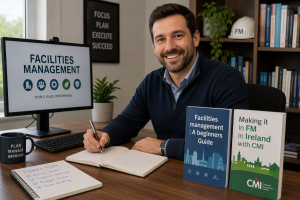
 Facilities management is far more than a background maintenance function; it is a strategic leadership discipline that integrates people, place, and process to ensure the functionality of the built environment. While the traditional view often focused on reactive repairs, modern
  Understanding the breadth of the role is vital for anyone entering the field. The industry typically divides its responsibilities into two distinct categories:
 At this venue you can how hard FM services keep the building operational, including the heating, ventilation and air-conditioning (HVAC) systems, electrical infrastructure, lighting controls and plumbing networks that support thousands of visitors. At the same time, soft FM services such as security, cleaning, catering and waste management ensure that every event runs smoothly and provides a positive experience for delegates.
 Key hard FM services are the electrical systems, emergency lighting, ventilation, building maintenance and other critical infrastructure required to support major events. Alongside this, soft FM services such as security, cleaning, crowd management and catering play a vital role in delivering a seamless visitor experience. The Three Arena provides an excellent example of how facilities managers combine technical building operations with people-focused services to achieve operational excellence and environmental responsibility. The venue also highlights the growing importance of sustainability in facilities management. Energy-efficient lighting, waste reduction programmes and strong public transport connections help minimise the environmental footprint of large-scale events.
 Entering the industry without a structured background can be daunting. If you’re researching facilities management courses for beginners, you’ll quickly find that the discipline relies on a specific professional vocabulary and a complex set of legal compliance standards.
 Starting a career in this field means moving beyond the “fix-it” mentality. Top-tier facilities management courses for beginners focus on the intersection of operational efficiency and strategic oversight.
 Transitioning into a new industry requires more than just enthusiasm; it demands a methodical approach to skill acquisition and networking. Most successful professionals in the Irish market didn’t start with a degree in building services.
 They prioritise the needs of career-focused individuals who require practical, actionable knowledge that can be deployed immediately in the Irish workplace. By choosing a provider with over two decades of proven success, you’re investing in a reputation that national employers recognise and respect.