Level 8 Health and Safety Courses Ireland: The Essential Guide for Career Success in Health and Safety
Is Now the Right Time to Change Career Or Make a Career Move?
Have you noticed how almost every major employer now places health and safety at the centre of their business strategy? From pharmaceutical manufacturers and construction companies to technology firms, logistics, and pharmaceutical, organisations are investing more heavily than ever before in qualified safety professionals.
For professionals seeking career progression, improved earning potential, and greater responsibility, a Level 8 Health and Safety Course Ireland qualification can provide a valuable pathway into one of Ireland’s most in-demand professions. This essential guide to career success in health and safety will explore the demand for safety professionals, the sectors, the roles, and what you need to look for in a level 8 health and safety course in Ireland.
Why is their Growth in Demand for Qualified Health and Safety Professionals
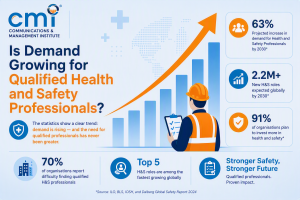
The statistics highlight a strong and growing demand for qualified health and safety professionals worldwide. Industry projections indicate a 63% increase in demand for health and safety professionals by 2030, while more than 2.2 million new health and safety roles are expected to be created globally during the same period.
Employers are also investing heavily in workplace safety, with 91% of organisations planning to increase spending on health and safety initiatives. At the same time, 70% of organisations report difficulties recruiting suitably qualified health and safety personnel, creating significant career opportunities for those holding recognised qualifications.
With health and safety roles ranked among the top five fastest-growing professions globally, the evidence clearly shows that qualified practitioners are essential to supporting safer workplaces, regulatory compliance, and organisational success across all sectors.
The demand for skilled health and safety practitioners continues to grow across Ireland. A simple search on major Irish recruitment platforms regularly reveals hundreds of vacancies for Health & Safety Officers, Safety Advisors, EHS Specialists, Safety Managers, and Environmental Health & Safety professionals. Many of these entry to medium level roles offer salaries ranging from €45,000 to over €98,000 depending on experience and sector.
The role of the health and safety practitioner has changed significantly over the past decade. Previously, many organisations viewed health and safety primarily as a compliance function focused on inspections, documentation, and regulatory requirements. Today, employers recognise that effective health and safety management directly impacts productivity, employee wellbeing, reputation, sustainability, and business performance.
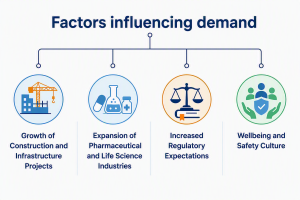
Several factors are driving increased demand for qualified professionals.
Growth of Construction and Infrastructure Projects
Ireland continues to experience significant investment in housing, commercial developments, data centres, and infrastructure projects. Every project requires competent safety personnel capable of ensuring compliance with Health and Safety Authority (HSA) regulations while promoting safe working practices across increasingly complex worksites. Construction employers actively recruit Health & Safety Advisors and Safety Officers to meet these requirements.
Expansion of Pharmaceutical and Life Science Industries
Ireland remains a global hub for pharmaceutical and medical device manufacturing. Large multinational employers require experienced EHS professionals who understand risk management, occupational health, environmental compliance, and regulatory requirements. The pharma sector continues to create excellent career opportunities for qualified health and safety practitioners.
Increased Regulatory Expectations
Regulatory compliance has become increasingly complex. Organisations must demonstrate robust health and safety systems, perform risk assessments, investigate incidents, manage contractors, and provide ongoing employee training. Employers therefore seek professionals with recognised qualifications who can help ensure compliance and minimise organisational risk.
Growing Focus on Wellbeing and Safety Culture
Modern organisations understand that workplace safety extends beyond accident prevention. Mental health, employee wellbeing, engagement, and organisational culture are now key strategic priorities. Health and safety professionals are increasingly expected to influence leadership teams, promote positive workplace cultures, and support long-term wellbeing initiatives.
Skills Shortages Across Ireland
Many sectors are experiencing difficulties recruiting experienced safety professionals. As a result, employers often prioritise candidates with recognised qualifications and demonstrated professional competence. A Level 8 Health and Safety Course Ireland qualification can help differentiate candidates in a competitive employment market.
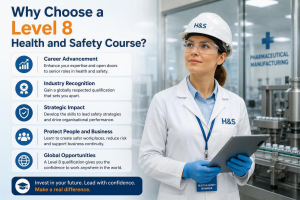
Why Choose a Level 8 Health and Safety Course?
If you are looking to progress into the health and safety profession, then considering a qualification that demonstrates both practical competence and management-level knowledge, makes sense. A Level 8 Health and Safety Course Ireland can provide exactly that.
Bloom’s Taxonomy at a Level 6 qualification (RQF England), comparable to Level 8 on the Irish NFQ, requires learners to move beyond knowledge and understanding to critically analyse, evaluate, and apply occupational health and safety principles in complex workplace situations.
Learners are expected to assess risks, develop solutions, justify recommendations, and demonstrate independent professional judgement when managing health and safety systems and compliance. Successfully passing a level 8 health and safety course, demonstrates advanced knowledge, practical competence, and unlike short health and safety training programmes, develops a deeper understanding of safety practice.
Key Benefits of a Level 8 Health and Safety Course
A Level 6 Diploma in Occupational Health and Safety on the RQF (England), comparable to a Level 8 qualification on Ireland’s National Framework of Qualifications (NFQ), is widely regarded as the ideal level for aspiring health and safety professionals. Many employers specifically seek candidates with recognised health and safety qualifications when recruiting advisors, officers, coordinators, and managers. A Level 8 qualification demonstrates commitment to professional development and industry standards.
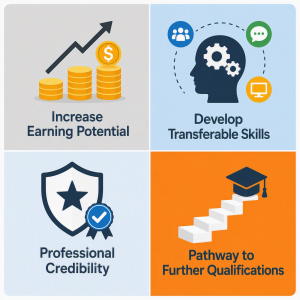
Increase Earning Potential
Qualified safety professionals often command higher salaries due to their specialist expertise. Many advertised Irish health and safety positions offer competitive salary packages and clear progression pathways.
Develop Transferable Skills
The skills gained through a Level 8 Health and Safety Course Ireland are applicable across numerous industries including:
Construction
Pharmaceutical manufacturing
Medical devices
Logistics and warehousing
Utilities
Technology
Energy
Public sector organisations
Strengthen Professional Credibility
A recognised qualification can improve your professional standing when working with senior management, regulators, contractors, and external stakeholders.
Pathway to Further Qualifications
For many learners, a Level 8 health and safety course provides a foundation for progression into higher-level specialist post graduate diploma qualifications and professional memberships.
Health and Safety Career Opportunities in Ireland
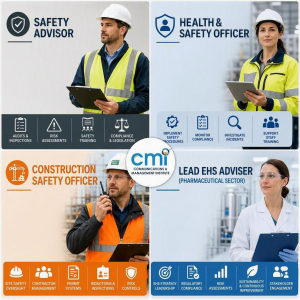
One of the main reasons professionals enrol in a Level 8 Health and Safety Course Ireland is the broad range of career opportunities available after graduation. Typical graduate roles include:
Safety Advisor
Safety Advisors support organisations by conducting audits, inspections, risk assessments, and safety training while ensuring compliance with legislation. They frequently work across multiple sites and play an important role in improving workplace safety performance.
Health & Safety Officer
Health & Safety Officers are often responsible for implementing workplace safety procedures, monitoring compliance, investigating incidents, and supporting staff training. These positions exist across virtually every industry sector in Ireland.
Construction Safety Officer
Construction remains one of Ireland’s strongest employment sectors for health and safety professionals. Construction Safety Officers oversee site safety, contractor management, permit systems, inductions, inspections, and risk controls on active developments.
Lead EHS Adviser (Pharmaceutical Sector)
Ireland’s pharmaceutical industry offers some of the most attractive career opportunities for health and safety professionals. Lead EHS Advisers typically support complex manufacturing facilities, environmental programmes, occupational health initiatives, and regulatory compliance activities.
Why Are Employers Investing More Heavily in Health and Safety Expertise Than Ever Before?
For employers, the consequences of workplace accidents can include legal penalties, lead to project delays, insurance increases, reputational damage, and employee dissatisfaction. As a result, organisations at senior management level increasingly view health and safety as a business-critical function rather than merely a compliance requirement.
Companies within construction, pharma, manufacturing, energy, and logistics increasingly recruit qualified professionals who can contribute directly to organisational objectives while maintaining safe workplaces.
What Skills Can You Gain from a Level 8 Health and Safety Course?
A quality Level 8 Health and Safety Course Ireland combines technical knowledge, management capability, and practical workplace application.
Graduates develop the practical skills needed to identify, and control workplace risks while ensuring compliance with health and safety legislation. Students should learn how to implement safety management systems, conduct inspections, manage contractors and occupational wellbeing programmes. The qualification should strengthen leadership, communication, and continuous improvement skills, enabling you to build a positive and proactive safety culture within your organisations.
These skills are highly valued by employers and applicable across multiple sectors.
What Elements Should You Look for in a Level 8 Health and Safety Course in Ireland?
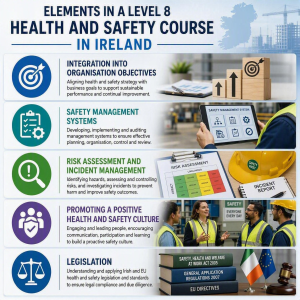
Integration into Organisation Objectives; When evaluating a Level 8 health and safety course in Ireland, a high-quality programme should provide you with a strong understanding of health and safety management principles, including policy development, organisational responsibilities, performance measurement, and the integration of health and safety into overall business objectives.
Safety Management Systems: A comprehensive course should also focus on the practical application of health and safety management systems. You should develop the ability to implement, monitor, review, and improve workplace safety arrangements. Topics such as auditing, compliance monitoring, performance evaluation, and continuous improvement are essential for those seeking to progress into Health and Safety Officer, Advisor, or Management roles.
Risk assessment and incident management: These are among the most valuable components of any occupational health and safety qualification. A strong programme should equip you with the skills to identify hazards, evaluate risk levels, implement control measures, and investigate workplace incidents. These competencies are critical for preventing accidents, reducing organisational risk, and maintaining safe working environments.
Promoting a positive health and safety culture: Another key feature of a quality health and safety course is its emphasis on leadership and safety culture. Modern organisations recognise that workplace safety is influenced not only by procedures and systems but also by employee engagement and management commitment. You should develop skills in communication, behavioural safety, workforce engagement, where everyone takes responsibility for health and safety.
Legislation: Finally, a reputable Level 8-equivalent programme should include extensive coverage of health and safety legislation, professional practice, and practitioner development. Understanding legal responsibilities and regulatory requirements is essential for ensuring compliance and reducing organisational liability. The programme should also help you strengthen your professional competence, preparing you for long-term career progression in occupational health and safety management.
Choosing the Right Level 8 Health and Safety Course Ireland
When selecting a qualification, it is important to consider accreditation, industry recognition, flexibility, and progression opportunities.
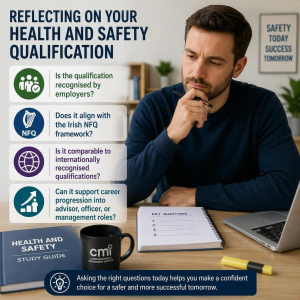
Ask yourself:
Is the qualification recognised by employers?
Does it align with the Irish NFQ framework?
Is it comparable to internationally recognised qualifications?
Can it support career progression into advisor, officer, or management roles?
Does the provider offer flexible study options for working professionals?
Is the curriculum aligned with current industry needs?
The strongest programmes combine academic rigour with practical application, ensuring graduates can immediately apply their learning in the workplace.
Final Thoughts
A Level 8 Health and Safety Course Ireland can be a powerful investment in your future. As organisations face increasing regulatory requirements, growing ESG expectations, and expanding workplace safety responsibilities, qualified practitioners continue to play a critical role across every industry.
The question is no longer whether health and safety professionals are in demand. The real question is: are you ready to position yourself for the opportunities that demand creates?
Whether your goal is become a Health & Safety Officer, Construction Safety Officer, or Lead EHS Adviser A recognised Level 8 qualification can provide the knowledge, credibility, and professional skills needed to advance your career. Check out our blog How to become a Safety Officer in Ireland guide to help you get there.
You will also need to ensure your CV conveys a significant amount of health and safety skills and qualifications. Read more about our Health & Safety Skills for CV success guide for advice on optimising your interview chances.
Do you meet the entry criteria?
Entry to a Level 8-equivalent Occupational Health and Safety Diploma programme is typically open to individuals who have completed a Level 5 Health and Safety qualification, have at least two years of relevant work experience, or hold a qualification in a related field such as science, risk management, occupational health, law, or technology. Applicants are generally required to submit a CV outlining their qualifications and professional experience, along with evidence of English language competency where applicable. If you successfully graduate from a level 8 Diploma in Occupational Health and Safety, learn how you will qualify to enter our Level 9 Health and Safety Course and the Msc, Masters degree options available t you.
Where to study?
Established in 2004, CMI Communications & Management Institute has built a strong reputation as one of Ireland’s leading providers of Occupational Health and Safety qualifications. Through its dedicated School of Environmental Health and Safety, CMI delivers IOSH-accredited programmes that have helped thousands of professionals develop successful careers across construction, pharmaceutical, manufacturing, healthcare, utilities, and public sector organisations throughout Ireland.
For more than 20 years, CMI graduates have progressed into Health and Safety Officer, Advisor, and Health and Safety Management roles, supported by industry-focused learning, and expert practitioner tutors. CMI is a centre of excellence with a dedicated School of Environmental Health and Safety that has helped thousands of learners and organisations achieve their occupational health and safety goals,.
What is a Level 8 Health and Safety qualification in Ireland?
A Level 8 Health and Safety qualification is an advanced professional award designed for individuals seeking to develop specialist knowledge in occupational health and safety management. It equips learners with the skills to identify workplace risks, implement safety systems, and ensure compliance with health and safety legislation across a range of industries.
Who should study a Level 8 Health and Safety course?
A Level 8 Health and Safety course is ideal for health and safety officers, supervisors, managers, construction professionals, facilities managers, and anyone responsible for workplace safety. It is also suitable for those looking to move into a health and safety career or progress into senior management positions.
What career opportunities can a Level 8 Health and Safety qualification lead to?
Graduates can pursue roles such as Health and Safety Officer, Safety Advisor, HSE Manager, Compliance Manager, Risk Manager, and Health and Safety Consultant. The qualification can also support career advancement into leadership positions across construction, manufacturing, pharmaceutical, logistics, and public sector organisations.
Why is a Level 8 Health and Safety qualification valuable to employers?
Employers value Level 8 Health and Safety qualifications because they demonstrate advanced knowledge of risk management, workplace compliance, accident prevention, and safety leadership. Qualified professionals help organisations reduce incidents, protect employees, improve operational performance, and maintain legal compliance.
How can a Level 8 Health and Safety course support long-term career success?
A Level 8 Health and Safety qualification enhances professional credibility, develops leadership skills, and provides in-depth knowledge of modern safety management practices. It can increase earning potential, improve job security, and open pathways to further professional and academic qualifications, such as a postgraduate diploma and an MSc in Environmental, Health and Safety making it a valuable investment in career growth.
We use cookies on our website to give you the most relevant experience by remembering your preferences and repeat visits. By clicking “Accept All”, you consent to the use of ALL the cookies. However, you may visit "Cookie Settings" to provide a controlled consent.
This website uses cookies to improve your experience while you navigate through the website. Out of these, the cookies that are categorized as necessary are stored on your browser as they are essential for the working of basic functionalities of the website. We also use third-party cookies that help us analyze and understand how you use this website. These cookies will be stored in your browser only with your consent. You also have the option to opt-out of these cookies. But opting out of some of these cookies may affect your browsing experience.
Necessary cookies are absolutely essential for the website to function properly. These cookies ensure basic functionalities and security features of the website, anonymously.
Cookie
Duration
Description
cookielawinfo-checkbox-analytics
11 months
This cookie is set by GDPR Cookie Consent plugin. The cookie is used to store the user consent for the cookies in the category "Analytics".
cookielawinfo-checkbox-functional
11 months
The cookie is set by GDPR cookie consent to record the user consent for the cookies in the category "Functional".
cookielawinfo-checkbox-necessary
11 months
This cookie is set by GDPR Cookie Consent plugin. The cookies is used to store the user consent for the cookies in the category "Necessary".
cookielawinfo-checkbox-others
11 months
This cookie is set by GDPR Cookie Consent plugin. The cookie is used to store the user consent for the cookies in the category "Other.
cookielawinfo-checkbox-performance
11 months
This cookie is set by GDPR Cookie Consent plugin. The cookie is used to store the user consent for the cookies in the category "Performance".
viewed_cookie_policy
11 months
The cookie is set by the GDPR Cookie Consent plugin and is used to store whether or not user has consented to the use of cookies. It does not store any personal data.
Functional cookies help to perform certain functionalities like sharing the content of the website on social media platforms, collect feedbacks, and other third-party features.
Performance cookies are used to understand and analyze the key performance indexes of the website which helps in delivering a better user experience for the visitors.
Analytical cookies are used to understand how visitors interact with the website. These cookies help provide information on metrics the number of visitors, bounce rate, traffic source, etc.
Advertisement cookies are used to provide visitors with relevant ads and marketing campaigns. These cookies track visitors across websites and collect information to provide customized ads.

 Is Now the Right Time to Change Career Or Make a Career Move?
 The statistics highlight a strong and growing demand for qualified health and safety professionals worldwide. Industry projections indicate a 63% increase in demand for health and safety professionals by 2030, while more than 2.2 million new health and safety roles are expected to be created globally during the same period.
 Growth of Construction and Infrastructure Projects
 If you are looking to progress into the health and safety profession, then considering a qualification that demonstrates both practical competence and management-level knowledge, makes sense. A Level 8 Health and Safety Course Ireland can provide exactly that.
 A Level 6 Diploma in Occupational Health and Safety on the RQF (England), comparable to a Level 8 qualification on Ireland’s National Framework of Qualifications (NFQ), is widely regarded as the ideal level for aspiring health and safety professionals. Many employers specifically seek candidates with recognised health and safety qualifications when recruiting advisors, officers, coordinators, and managers. A Level 8 qualification demonstrates commitment to professional development and industry standards.
 One of the main reasons professionals enrol in a Level 8 Health and Safety Course Ireland is the broad range of career opportunities available after graduation. Typical graduate roles include:
 Integration into Organisation Objectives; When evaluating a Level 8 health and safety course in Ireland, a high-quality programme should provide you with a strong understanding of health and safety management principles, including policy development, organisational responsibilities, performance measurement, and the integration of health and safety into overall business objectives.
 When selecting a qualification, it is important to consider accreditation, industry recognition, flexibility, and progression opportunities.
 Entry to a Level 8-equivalent Occupational Health and Safety Diploma programme is typically open to individuals who have completed a


